
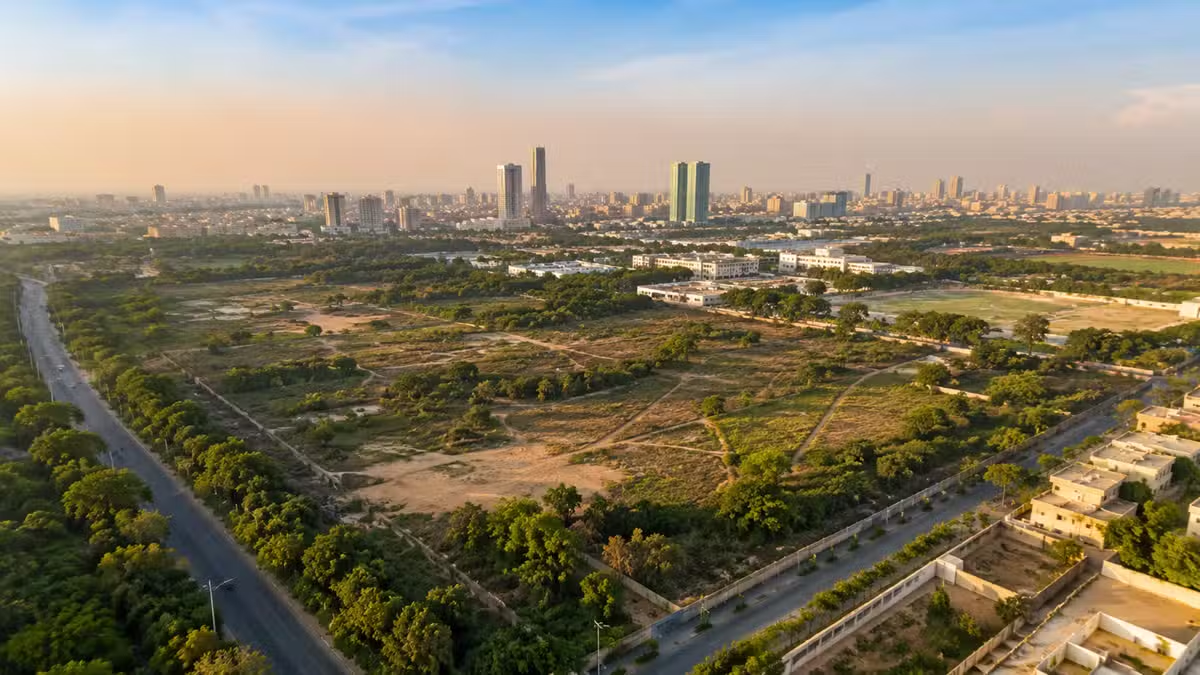
The Karachi Development Authority (KDA) has proposed the development of prime government-owned land valued at an estimated Rs. 90 billion through a public-private partnership (PPP) model. The initiative aims to attract private investment for large-scale urban development while maximizing the value of high-potential land assets across Karachi.
According to official details, the KDA has formally approached the Sindh Local Government Department to seek approval for the proposed partnership. The authority believes that collaborating with the private sector will accelerate development projects, generate revenue, and contribute to the city’s long-term infrastructure and economic growth.
The proposal has been submitted by the Director General of the Karachi Development Authority, who has requested permission to offer several strategically located land parcels for development under the PPP framework. A summary seeking formal approval has also been forwarded to the Sindh Local Government Department for consideration.
The land identified for the project is estimated to be worth around Rs. 90 billion, making it one of the most significant urban development proposals currently under review in Karachi. If approved, the initiative could pave the way for commercial, residential, and mixed-use developments in key areas of the city.
Public-private partnerships have increasingly become a preferred model for executing large infrastructure and real estate projects in Pakistan. Under this approach, government agencies retain ownership of public assets while leveraging private sector expertise, financing, and project management capabilities to accelerate development.
Urban planning experts believe that a well-structured PPP model can help unlock the economic potential of underutilized land, improve public infrastructure, and create new investment opportunities. However, they also stress that transparency, competitive bidding, and strong regulatory oversight are essential to ensure public assets are managed responsibly.
The proposed project is expected to undergo further review by the Sindh Local Government Department before any final approval is granted. Authorities will likely evaluate the legal, financial, and technical aspects of the proposal to determine its feasibility and long-term benefits.
If the plan receives the green light, it could attract substantial private investment into Karachi’s real estate and construction sectors while supporting job creation and broader economic activity. At the same time, stakeholders are expected to closely monitor the project to ensure transparency and safeguard public interests throughout the development process.
The outcome of the proposal could play an important role in shaping future urban development policies in Karachi, particularly as government institutions increasingly explore partnerships with the private sector to address infrastructure and land development challenges.