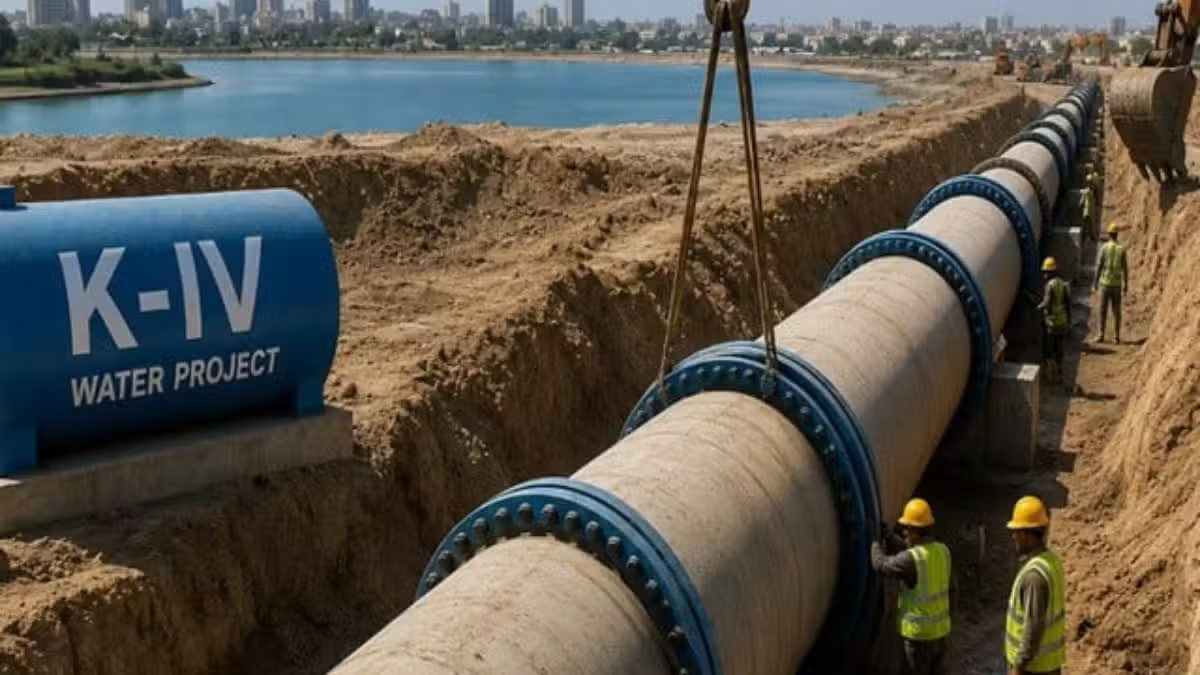
Karachi’s long-awaited K-IV water supply project continues to face financial and implementation challenges, with the federal government informing lawmakers that an additional Rs. 70 billion is needed to complete the mega infrastructure scheme. The disclosure comes despite Rs. 86 billion already having been spent on the project, which is considered critical to addressing Karachi’s growing water shortage.
The update was shared during a meeting of the National Assembly Standing Committee on Water Resources, where officials reviewed the progress of the K-IV project and discussed the obstacles delaying its completion. The project has remained one of Pakistan’s most significant water infrastructure initiatives, aimed at improving water availability for millions of residents in the country’s largest city.
During the committee meeting, Minister for Water Resources Moeen Wattoo informed members that approximately 40 percent of the project has been completed. While acknowledging the progress made so far, he emphasized that the distribution of water after the project’s completion falls under the jurisdiction of the Sindh government.
The committee reviewed a Calling Attention Notice submitted by MNA Aminul Haque, who raised concerns over the prolonged delays affecting the project. Lawmakers sought updates on construction progress, funding requirements, and the expected timeline for delivering the much-needed water supply to Karachi.
The K-IV project has been under discussion for years as Karachi continues to experience increasing pressure on its water resources due to rapid population growth, urban expansion, and rising demand. Once completed, the project is expected to significantly enhance the city’s water supply and improve access to clean drinking water for millions of residents.
Officials told the committee that the project has already consumed substantial financial resources, with expenditures reaching Rs. 86 billion. However, an additional Rs. 70 billion will be required to complete the remaining construction work and bring the project into operation.
The funding gap highlights the financial challenges associated with completing large-scale infrastructure projects in Pakistan. Rising construction costs, inflation, and project delays have contributed to higher overall expenses, requiring additional government resources to ensure completion.
Karachi, Pakistan’s commercial and industrial hub, has long struggled with water shortages that affect households, businesses, and industries alike. Many residents depend on water tankers or alternative sources due to limited and inconsistent municipal water supply.
Experts believe the successful completion of the K-IV project could play a vital role in improving water security, supporting economic activity, and enhancing the quality of life for Karachi’s growing population. However, they also stress that efficient distribution systems, maintenance, and long-term water management strategies will be equally important to maximize the project’s benefits.
The committee’s discussion also underscored the need for stronger coordination between the federal and provincial governments. While the federal government is overseeing the project’s construction, the Sindh government will be responsible for managing water distribution once the system becomes operational.
Lawmakers emphasized the importance of accelerating work to prevent further cost escalations and ensure that Karachi’s residents receive the long-promised benefits of the project. They also called for greater transparency regarding project timelines, funding allocations, and implementation milestones.
As Pakistan continues investing in major infrastructure projects, the K-IV water supply scheme remains one of the country’s most closely watched public development initiatives. With only 40 percent of the work completed and additional funding still required, its progress will remain a key focus for policymakers and Karachi’s residents alike.