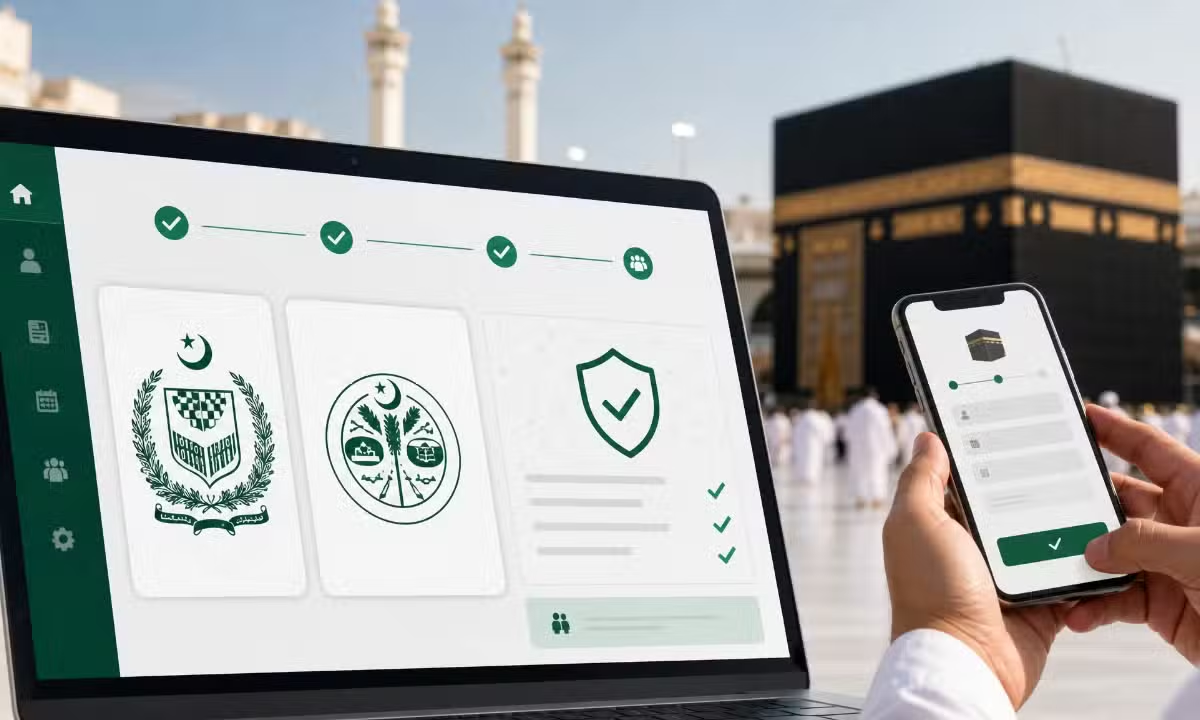
The Federal Cabinet has approved the Private Hajj Policy for 2027–2030, introducing a major shift in the management of private Hajj operations through a performance-based system, strict regulatory oversight, and full digitalization of financial and booking processes.
According to a spokesperson from the Ministry of Religious Affairs, the new framework is designed to replace the traditional quota-based structure with a more transparent and efficiency-driven model. Under the updated policy, private Hajj quotas will be allocated on the basis of operational performance, compliance standards, and service quality, following a “first come, first served” principle.
A key feature of the policy is the mandatory requirement for private Hajj companies to secure a minimum of 2,000 pilgrims. Firms failing to meet this threshold will be declared inactive, and half of their security deposit will be forfeited. In such cases, registered pilgrims will be transferred to other active operators to ensure continuity of services.
To improve accountability and professionalism within the sector, independent experts will evaluate and rank all licensed Hajj operators. Licenses will be issued for a three-year period, with renewal contingent upon performance and compliance. The government has also imposed a strict ban on the sale or purchase of Hajj quotas, warning of strict action against any cartelization or monopolistic practices.
The policy introduces a fully digital system for managing private Hajj operations. All bookings will now be processed exclusively through a dedicated Private Hajj Management Portal, which will be integrated with NADRA and the State Bank of Pakistan to ensure secure verification and financial transparency.
Under the new system, manual bookings and cash-based transactions will no longer be permitted. Private Hajj companies will also be prohibited from directly handling pilgrim funds. Instead, payments for services in Saudi Arabia will be routed directly through official State Bank channels, minimizing the risk of mismanagement or fraud.
Officials say the reforms aim to enhance transparency, protect pilgrims, and modernize Pakistan’s Hajj management system in line with international standards. By introducing digital oversight and performance-based evaluation, the government hopes to eliminate inefficiencies and improve service delivery for thousands of intending pilgrims each year.
The Private Hajj Policy 2027–2030 marks one of the most significant structural reforms in the country’s religious tourism sector, signaling a shift toward greater accountability, digitization, and regulated competition among service providers.