
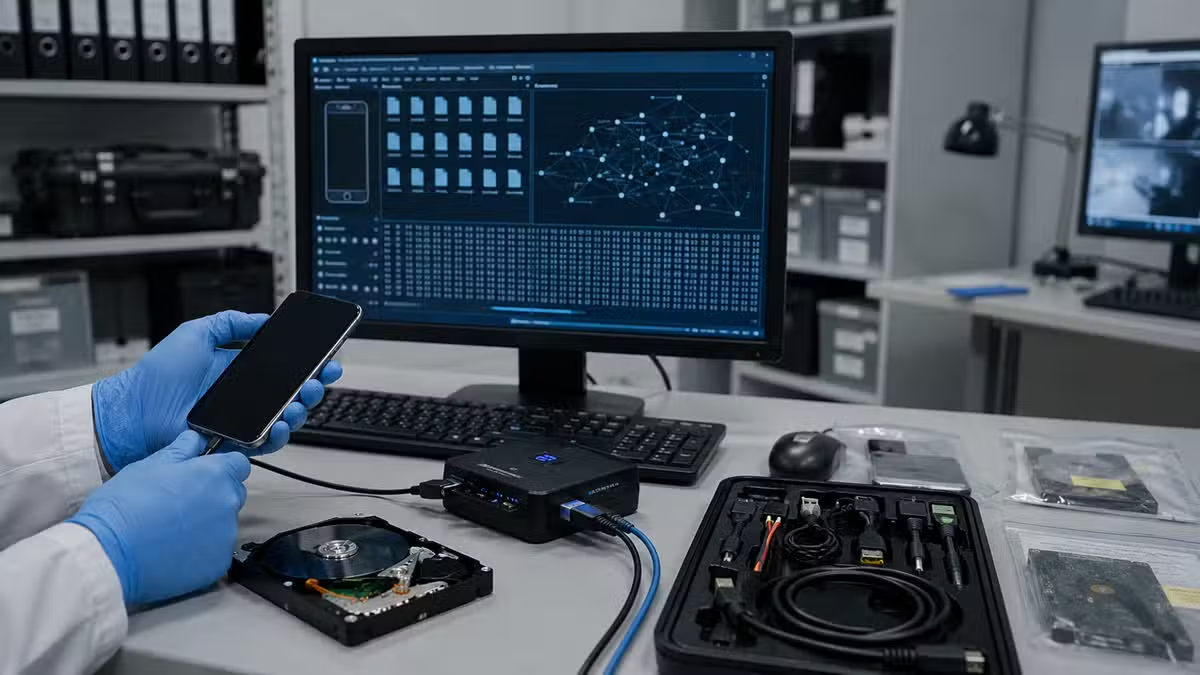
The Sindh Police has announced plans to establish a state-of-the-art digital forensic laboratory as part of its efforts to modernize law enforcement and enhance its ability to investigate technology-related crimes. The initiative is expected to significantly improve criminal investigations by enabling authorities to analyze digital evidence more efficiently and accurately.
The decision was discussed during a review meeting held at the Central Police Office on Tuesday. The meeting was chaired by Inspector General (IG) of Police Javed Alam Odho, who reviewed ongoing modernization initiatives and emphasized the importance of equipping law enforcement agencies with advanced technological capabilities to tackle emerging criminal threats.
The planned digital forensic laboratory will serve as a specialized facility for examining electronic devices and digital evidence collected during criminal investigations. With cybercrime and technology-enabled offenses becoming increasingly common, the new lab is expected to strengthen Sindh Police’s investigative capabilities across a wide range of cases.
Digital forensic laboratories play a critical role in modern policing by recovering, preserving, and analyzing data from mobile phones, computers, laptops, hard drives, surveillance systems, cloud storage, and other digital devices. Investigators use this evidence to uncover communication records, financial transactions, deleted files, location data, and other digital footprints that can support criminal prosecutions.
As criminals increasingly rely on digital technologies, law enforcement agencies worldwide are investing in advanced forensic tools to keep pace with evolving methods of crime. Establishing a dedicated digital forensic facility will enable Sindh Police to conduct more sophisticated investigations while reducing dependence on external forensic services.
The laboratory is expected to assist in investigating a variety of cases, including cybercrime, financial fraud, identity theft, terrorism-related investigations, organized crime, online scams, digital harassment, child exploitation, and other offenses involving electronic evidence. Accurate forensic analysis can also strengthen court proceedings by ensuring digital evidence is properly collected, preserved, and presented.
The initiative forms part of Sindh Police’s broader modernization strategy, which focuses on integrating advanced technology into policing operations. Upgrading investigative infrastructure, improving technical expertise, and adopting digital tools have become essential priorities as crime patterns continue to evolve in the digital age.
The review meeting also highlighted the growing importance of capacity building within law enforcement. Alongside establishing the laboratory, specialized training for investigators and forensic experts will likely be essential to maximize the effectiveness of advanced digital forensic technologies. Skilled personnel are critical for handling sensitive electronic evidence while maintaining internationally accepted forensic standards.
The establishment of a modern forensic laboratory could also improve coordination between law enforcement agencies, prosecutors, and judicial institutions by providing reliable technical evidence that supports timely investigations and successful prosecutions.
Pakistan has witnessed a steady rise in technology-driven crimes over recent years, including cyber fraud, online financial scams, data breaches, and digital identity theft. As individuals and businesses increasingly rely on digital platforms, the need for specialized forensic capabilities has become more important than ever.
By investing in advanced digital forensic infrastructure, Sindh Police aims to enhance public safety, improve the quality of criminal investigations, and strengthen the province’s ability to respond to increasingly sophisticated criminal activities. The initiative represents another step toward building a more technology-driven and efficient policing system capable of addressing the challenges of the digital era.