
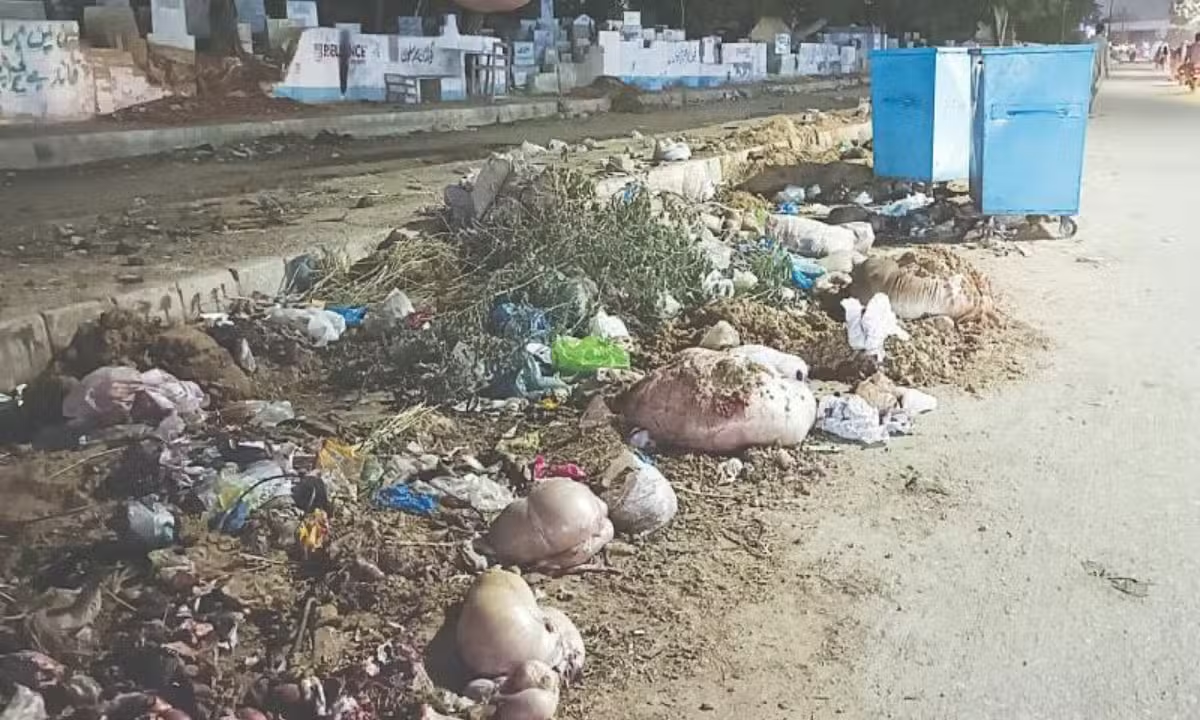
Karachi faced a major sanitation challenge during the three days of Eid ul Azha, as animal waste, delayed disposal operations, and inadequate civic management created unhygienic conditions in several parts of the city.
Residents from various neighborhoods reported the accumulation of animal remains, garbage, and waste on streets despite ongoing cleanup efforts by the Sindh Solid Waste Management Board (SSWMB). The situation led to widespread complaints about foul odors and concerns over public health.
The sanitation problems were further intensified by Karachi’s extreme weather conditions. High temperatures and humidity accelerated the decomposition of animal waste, causing unpleasant smells to spread through residential areas and commercial districts alike.
While the SSWMB continued its Eid-specific waste collection campaign on major roads and key locations, many residents claimed that cleanup operations in smaller streets and densely populated neighborhoods were either delayed or insufficient. As a result, waste remained unattended in several areas for extended periods.
Citizens expressed frustration over the slow pace of waste removal, particularly in communities where animal offal and garbage were left exposed during the festive period. Many residents also raised concerns about the potential spread of diseases and the impact of unsanitary conditions on daily life.
Experts note that Eid ul Azha consistently presents a significant logistical challenge for municipal authorities due to the large volume of animal waste generated within a short timeframe. Effective coordination, timely collection, and public cooperation are considered essential for maintaining cleanliness during the festival.
In addition to concerns about municipal performance, some observers pointed to improper waste disposal practices by citizens as a contributing factor. Waste dumped in open spaces, drains, and roadside areas complicated collection efforts and placed additional pressure on sanitation teams.
The recurring sanitation issues have reignited discussions about Karachi’s waste management infrastructure and the need for improved planning during major religious and public events. Urban management specialists argue that stronger coordination between local authorities and residents is necessary to prevent similar crises in the future.
Authorities have continued cleanup operations following Eid, with teams working to clear remaining waste and restore sanitary conditions across affected areas. However, the incident has once again highlighted the challenges Karachi faces in managing waste efficiently during periods of increased demand.
As the city recovers from the Eid festivities, residents and civic groups are calling for more effective waste management strategies, faster response mechanisms, and greater public awareness to ensure cleaner and healthier neighborhoods during future celebrations.