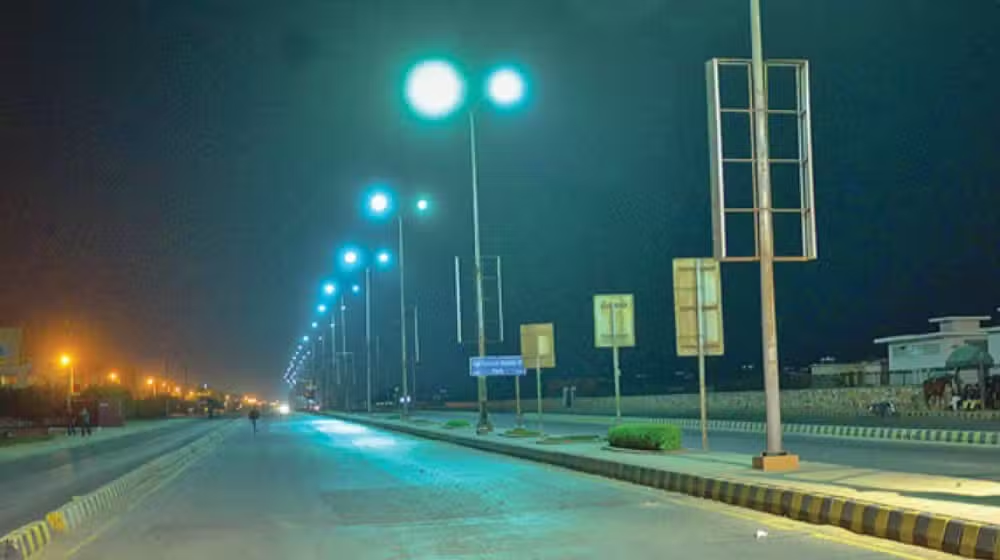
Karachi has taken a significant step toward sustainable urban development as street lights along Sharea Faisal have been converted to solar power under a Rs. 900 million project. The initiative was formally inaugurated on Sunday by City Mayor Barrister Murtaza Wahab and is being viewed as a milestone in the city’s transition toward cost-effective and environmentally friendly energy solutions.
Sharea Faisal is one of Karachi’s busiest and most strategically important roads, serving as a key artery connecting major commercial and residential areas. The shift to solar-powered lighting is expected to improve reliability while reducing dependence on conventional electricity sources that often strain the city’s power infrastructure.
Speaking at the inauguration ceremony, Mayor Wahab highlighted the financial benefits of the project. He stated that the conversion to solar energy is projected to save approximately Rs. 25 million annually in electricity costs. These savings are expected to ease pressure on the municipal budget and allow funds to be redirected toward other civic needs.
Under the project framework, the company responsible for installing the solar lighting system will also manage its operation and maintenance. This arrangement is designed to ensure uninterrupted functionality and timely repairs, reducing the burden on city authorities. The agreement includes a five-year warranty, offering additional assurance regarding performance and durability.
Officials noted that solar-powered street lighting offers long-term advantages beyond cost savings. Solar systems reduce carbon emissions, lower reliance on fossil fuels, and provide consistent illumination even during power outages. For a city like Karachi, which frequently faces electricity disruptions, this reliability is particularly important for traffic safety and public security.
The project aligns with broader efforts by the city administration to modernize infrastructure while adopting environmentally responsible practices. Urban planners have emphasized that renewable energy initiatives can play a crucial role in addressing rising energy costs and environmental challenges in large metropolitan areas.
Residents and commuters using Sharea Faisal are expected to benefit from improved visibility and reduced lighting failures. Well-lit roads contribute to smoother traffic flow, enhance pedestrian safety, and support law enforcement efforts, particularly during nighttime hours.
City officials have indicated that the success of this project could pave the way for similar initiatives across other major roads and neighborhoods in Karachi. Expanding solar lighting infrastructure would further strengthen the city’s resilience to energy shortages and rising utility costs.
Experts believe that such projects demonstrate how large urban centers can integrate renewable energy into essential public services. By combining financial planning with sustainable technology, cities can achieve long-term economic and environmental benefits.
The solar lighting conversion on Sharea Faisal represents a practical example of how targeted infrastructure investments can deliver measurable savings while supporting environmental goals. As Karachi continues to grow, initiatives like this are expected to play an increasingly important role in shaping a more efficient and sustainable urban future.