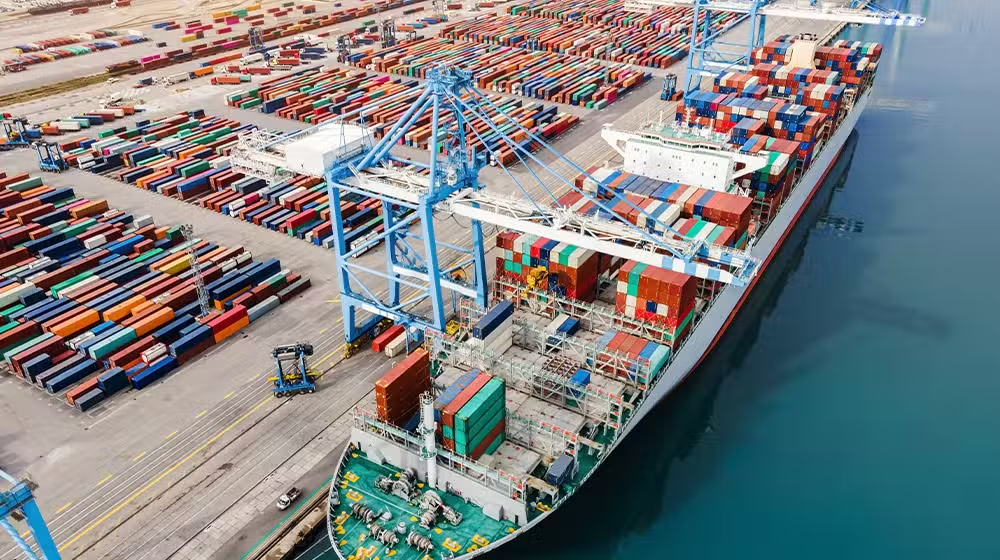
Pakistan’s maritime sector is witnessing an unprecedented surge as cargo activity at its major ports rises sharply amid ongoing global shipping disruptions. The redirection of trade flows, primarily influenced by instability in key Middle Eastern shipping corridors, has positioned the country as an emerging logistics hub in the region.
Recent data reveals that port operations across Karachi, Port Qasim, and Gwadar have reached record-breaking levels. This sudden spike is not only reshaping Pakistan’s shipping landscape but also strengthening its role in international trade connectivity. The surge reflects how global uncertainties often create new economic opportunities for strategically located nations.
Karachi Port, in particular, has recorded extraordinary growth in transshipment volumes. In just the past 24 days, the port has handled over 8,300 containers, surpassing the total volume processed throughout the entire previous year. In 2025, Karachi Port managed approximately 8,300 containers in total, while recent figures show 8,313 containers processed in less than a month. This marks an astonishing increase of more than 1,400 percent.
The sharp rise in cargo activity highlights a significant shift in global shipping patterns. As traditional routes face congestion and security concerns, shipping companies are increasingly opting for alternative ports that offer efficiency and strategic access. Pakistan’s ports are benefiting from this diversion, thanks to their geographic proximity to key trade lanes and improving infrastructure.
Industry experts believe that this momentum could have long-term implications for Pakistan’s economy. Increased port activity often translates into higher revenues, job creation, and enhanced investor confidence. Moreover, it provides an opportunity for authorities to further modernize port facilities and streamline logistics operations to sustain growth.
However, maintaining this upward trajectory will require consistent policy support and operational efficiency. Addressing bottlenecks, enhancing digital systems, and ensuring security will be crucial in retaining international shipping lines. The current surge serves as both an opportunity and a test for Pakistan’s maritime capabilities.
As global trade continues to evolve, Pakistan’s ports are emerging as critical players in the regional logistics network. The remarkable increase in cargo volumes signals a turning point, potentially redefining the country’s position in global shipping dynamics.