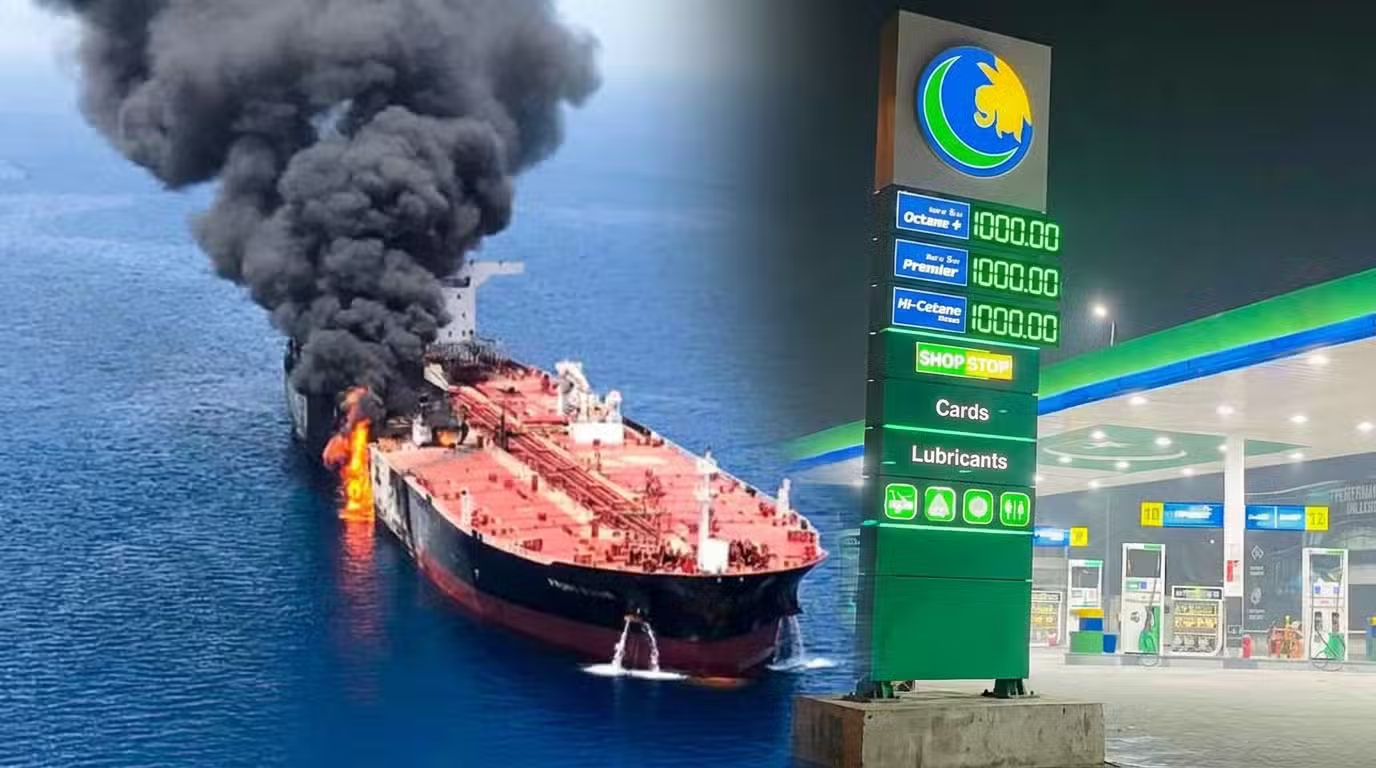
Petrol prices in Pakistan could face significant upward pressure if international oil prices surge and the government is required to withdraw fuel subsidies. Recent projections have raised concerns about a potential scenario in which petrol could cost more than Rs. 1,000 per litre if disruptions around the Strait of Hormuz continue beyond 2026.
The possibility remains a forecast rather than a confirmed price prediction. However, the combination of rising global crude oil prices and changes in Pakistan’s fuel pricing policies could create substantial challenges for consumers and businesses.
According to a statement attributed to Russell Hardy, chief executive of Vitol Group, oil prices could climb to $200 per barrel if shipments through the Gulf of Oman and the Strait of Hormuz face further disruptions. Hardy reportedly discussed the potential risks at an energy forum in London.
The Strait of Hormuz is a critical route for global energy supplies. Any prolonged interruption to shipping through the area could reduce the availability of oil in international markets, push up transportation costs, and increase prices for countries that rely heavily on imported petroleum.
An independent energy market analyst based in Karachi told ProPakistani that petrol prices in Pakistan could exceed Rs. 1,000 per litre if international oil prices reached $200 per barrel and the government had to eliminate fuel subsidies under pressure linked to its International Monetary Fund (IMF) commitments.
Here are the two major factors that could contribute to such a scenario.
1. International Oil Prices Could Surge to $200 per Barrel
The first major risk is a sharp increase in global crude oil prices resulting from prolonged geopolitical tensions and disruptions to energy shipments.
Oil prices are influenced by supply and demand, production levels, transportation routes, and expectations about future availability. If a major shipping corridor such as the Strait of Hormuz becomes increasingly difficult to use, global buyers may compete for fewer available supplies.
Such conditions could push crude oil prices significantly higher than their current levels. According to the figures cited in the report, international oil was trading at approximately $103 per barrel, while petrol in Pakistan was around Rs. 400 per litre at the time.
If crude oil prices were to rise toward $200 per barrel, Pakistan could face substantially higher import costs. Since the country depends on imported petroleum to meet a significant portion of its energy needs, an increase in global prices could place additional pressure on domestic fuel prices and the national economy.
However, the relationship between international crude oil prices and retail petrol prices is not perfectly proportional. Exchange rates, refining costs, freight charges, taxes, petroleum levies, and other pricing components also influence the final price consumers pay.
2. Withdrawal of Fuel Subsidies Under IMF-Linked Reforms
The second factor is the possibility of Pakistan reducing or removing fuel subsidies as part of its economic policy commitments.
Government subsidies can help limit the immediate impact of rising international oil prices on consumers. When the government absorbs part of the increase, retail fuel prices may remain lower than they would otherwise be, although the cost can place pressure on public finances.
If Pakistan were required to eliminate fuel subsidies while international crude oil prices were rising sharply, a greater share of the increased cost could be passed on to consumers.
The result could be a significant increase in petrol prices, particularly if higher import costs coincide with currency depreciation or additional taxes and levies.
The analyst cited in the report warned that the combination of oil prices reaching $200 per barrel and the removal of subsidies could push petrol beyond Rs. 1,000 per litre. This figure should be treated as a potential scenario, not an official government forecast or an announced price revision.
The IMF’s specific requirements and Pakistan’s final decisions on fuel pricing would be important in determining whether such an outcome could occur. Actual petrol prices would depend on the applicable policy framework and prevailing market conditions.
What Higher Petrol Prices Could Mean for Pakistan
A sharp increase in petrol prices could affect far more than motorists. Higher fuel costs generally raise transportation expenses, which can feed into the prices of food, consumer goods, agricultural inputs, and other essential products.
Businesses that rely on road transport could face higher operating costs, while commuters and households might have to spend more on daily travel. Inflationary pressure could also reduce consumers’ purchasing power.
For Pakistan, the challenge would be to manage higher international energy costs while protecting economic stability and limiting the burden on households.
Whether petrol reaches Rs. 1,000 per litre will depend on the scale and duration of any oil supply disruption, global crude prices, currency movements, and government decisions on taxes and subsidies. For now, the figure represents a warning about the potential consequences of a severe energy market shock rather than a confirmed outcome.