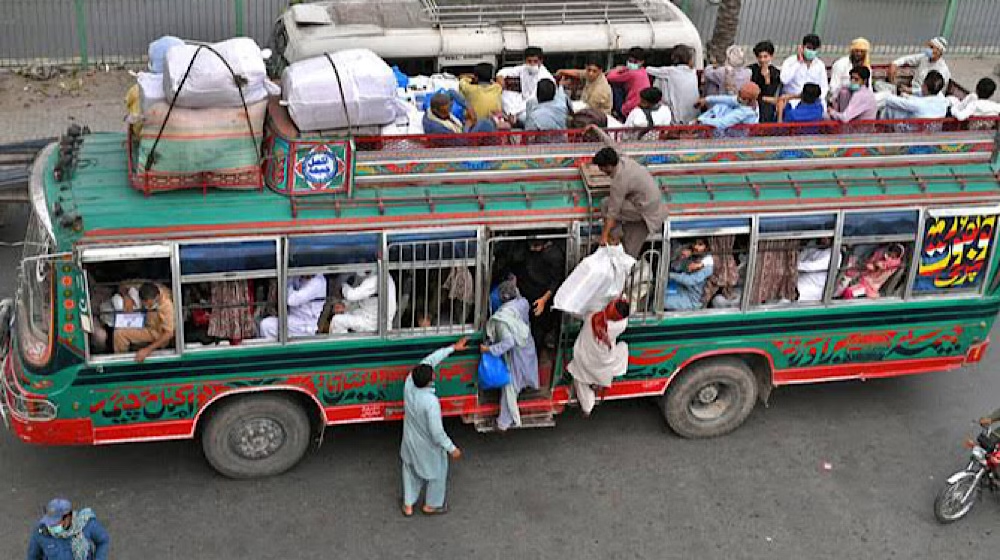
The Government of Sindh has introduced a targeted fuel subsidy program aimed at stabilizing public transport fares and easing financial pressure on commuters. The initiative was confirmed by provincial Information Minister Sharjeel Inam Memon as part of efforts to counter rising fuel costs.
The subsidy comes in response to increasing petrol and diesel prices, which have significantly impacted transport operators and, in turn, passengers. By offering financial support to transporters, the government aims to prevent fare hikes and ensure affordability for millions of daily commuters.
Under the scheme, a “targeted fuel differential subsidy” will be provided to operators of both intra-city and inter-city transport services. However, transporters must comply with government regulations and maintain existing fare levels to qualify for the monthly assistance.
For intra-city transport, buses, minibuses, and coaches will receive subsidies of up to Rs240,000 per month. Vans are eligible for up to Rs230,000, while Suzuki pickup vehicles can receive up to Rs60,000. These measures are expected to support urban transport networks and maintain stable pricing for short-distance travel.
In the inter-city segment, buses will receive up to Rs1.2 million per month depending on routes, while vans will qualify for subsidies ranging between Rs180,000 and Rs750,000 based on distance. This tiered approach ensures that long-distance operators also benefit from financial relief.
The масштаб of the program is significant, covering more than 9,000 intra-city vehicles and over 1,100 inter-city vehicles. Authorities estimate that around 57 million passengers will benefit each month, with an average relief of approximately Rs38 per passenger. The total monthly cost of the program is projected at Rs2.2 billion.
To ensure transparency and accountability, the government has implemented a fully digital and app-based system for registration, verification, and payments. Transactions will be processed through Sindh Bank, with integration from the Excise Department, Regional Transport Authority, and Pakistan Telecommunication Authority.
The system also incorporates passenger feedback and inspection mechanisms to monitor compliance and service quality. This digital framework is expected to minimize misuse and improve efficiency in subsidy distribution.
Additionally, the initiative extends support to individual المواطنين, as every motorcycle owner registered with the Excise Department will receive a fuel subsidy of Rs2,000. Authorities have also extended office hours until April 15 to facilitate increased registrations.
This subsidy program reflects Sindh’s broader strategy to manage inflationary pressures and protect public welfare. By combining financial relief with digital oversight, the government aims to create a sustainable and transparent model for public transport support.