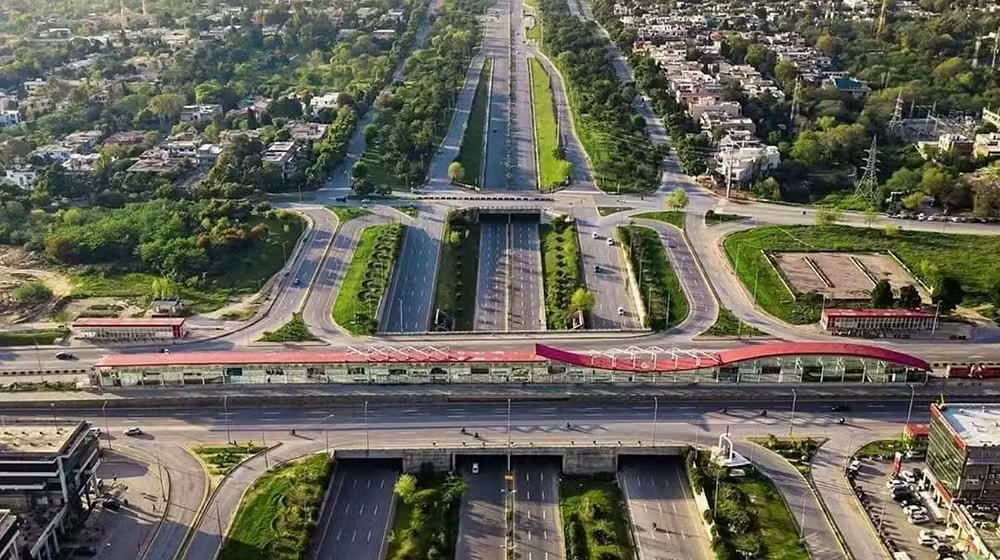
Islamabad is preparing for major road infrastructure expansion as city authorities have decided to revive the long-stalled 10th Avenue project and proceed with the construction of the proposed 11th Avenue. The move aims to address the expected surge in traffic following the completion of a new strategic road linking Margalla Road with Motorway M-1.
Officials believe that once the Margalla Road–M-1 link becomes operational, traffic volumes on Margalla Road will increase significantly. To prevent congestion and ensure smoother traffic flow, alternative routes are being developed to distribute traffic more efficiently across the capital.
The Capital Development Authority is currently in the final stages of the tender process for the Margalla Road–M-1 link road. This new route is designed to improve connectivity between Islamabad and major highways while also linking up with the Rawalpindi Ring Road in the future.
Urban planners within the CDA have warned that Margalla Road alone will not be able to handle the additional load generated by the new link. As a result, the revival of 10th Avenue and the construction of 11th Avenue have been identified as critical supporting projects.
The 10th Avenue project had remained stalled for years due to administrative and technical delays. However, authorities have now decided to restart work to ensure that the road is completed in time to complement the new highway connections.
Meanwhile, the proposed 11th Avenue will serve as an additional north-south corridor, providing another major artery for vehicles moving between different sectors of Islamabad. This is expected to reduce pressure on existing main roads and improve travel times for daily commuters.
Officials say that these avenues will not only help manage traffic but also improve access to newly developing areas of the city. Improved road connectivity is expected to boost commercial activity and enhance overall urban mobility.
The Margalla Road–M-1 link is being viewed as a key infrastructure project due to its role in connecting Islamabad directly with the national motorway network. Once linked with the Rawalpindi Ring Road, it will allow traffic to bypass congested city routes.
CDA sources indicate that traffic studies have shown a sharp increase in vehicle movement once the new road becomes functional. Without additional avenues, Margalla Road and surrounding arteries could face severe bottlenecks during peak hours.
City authorities have emphasized that the road expansion plan is part of a broader strategy to prepare Islamabad for future population growth and rising vehicle ownership. Long-term planning, they say, is essential to maintain the capital’s livability.
Residents and commuters are expected to benefit from reduced congestion, improved travel efficiency, and better connectivity between residential and commercial zones. However, authorities have acknowledged that construction phases may temporarily disrupt traffic in certain areas.
The CDA has assured that work on both avenues will follow standard engineering and environmental guidelines. Further details regarding timelines and execution phases are expected to be shared once the tender process is finalized.
With Islamabad’s traffic challenges growing each year, the revival of 10th Avenue and the launch of 11th Avenue signal a renewed focus on proactive urban planning and infrastructure development in the capital.