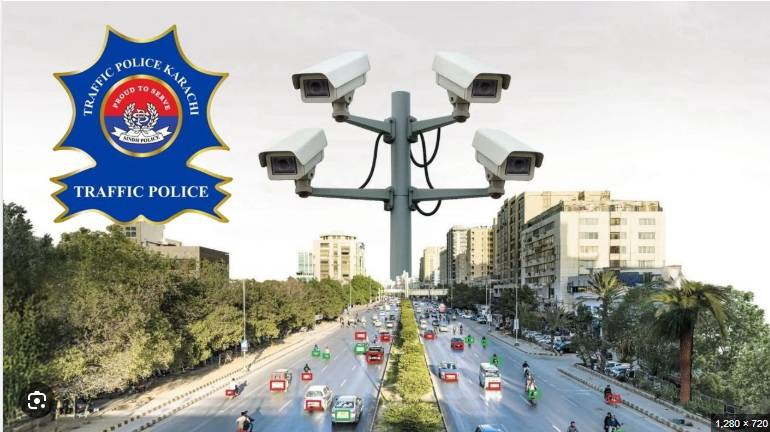
The Sindh government has introduced a strict enforcement measure allowing e-challaning of official vehicles for any violation of traffic rules in Karachi. A formal notification has been issued by the Services, General Administration and Coordination Department, making it clear that government officers and employees will be personally responsible for paying fines incurred through traffic violations.
The order, signed by Section Officer CT Aqeel Hussain Mako, states that any breach of traffic regulations by an official vehicle will result in an e-challan, and the fine must be paid from the violator’s own pocket rather than government funds. The move aims to promote accountability and ensure that public servants follow the same rules that apply to all citizens.
The directive further mentions that action will be taken under Section 116A of the Traffic Ordinance 1956, which empowers authorities to penalize violators through electronic monitoring systems.
Copies of the order have been issued to all top administrative bodies, including the Senior Member Board of Revenue, Chairman Anti-Corruption Establishment, Chairman Planning and Development, Chairman Sindh Public Service Commission, and Chairman Sindh Service Tribunal. Additionally, all departmental secretaries and divisional commissioners across Sindh have been notified to ensure immediate compliance.
The notification highlights several common violations that will now be subject to e-challans even for government vehicles. These include driving without a seat belt, using mobile phones while driving, running red lights, and the use of unlawful tinted windows. Authorities believe that bringing official vehicles under the same enforcement mechanism will help instill discipline and improve overall traffic management in the city.
The latest decision reflects the Sindh government’s effort to strengthen traffic regulation through digital monitoring and equal application of the law. With e-challaning already active in Karachi, extending the system to official vehicles is expected to reduce misuse and encourage safer driving practices.