
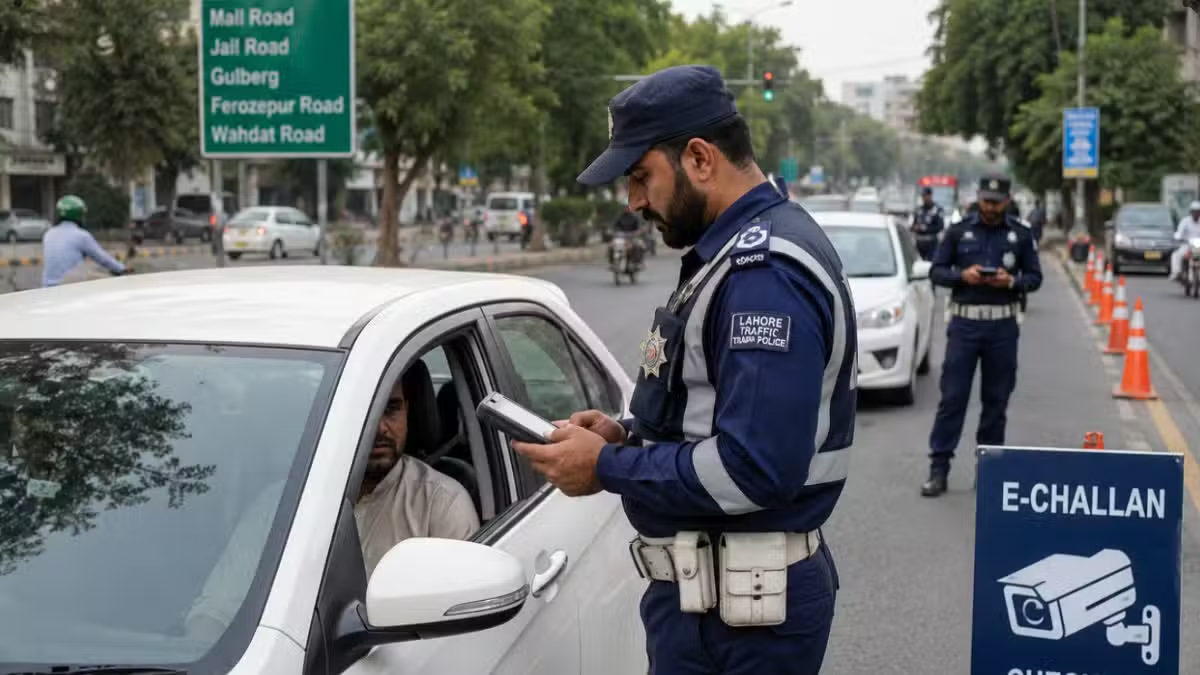
Citizens with unpaid e-challans could face restrictions on accessing important government services under a new requirement that links pending traffic fines with essential identity and licensing documents.
Under the proposed system, individuals may be required to clear outstanding e-challans before obtaining or accessing services related to their national identity card, driving licence, or passport.
The measure is aimed at encouraging citizens to pay traffic fines and improving compliance with traffic laws. By connecting unpaid penalties with government services, authorities would have a stronger mechanism to recover outstanding e-challan amounts.
E-challans have increasingly become an important part of digital traffic enforcement in Pakistan. Instead of relying only on traditional traffic tickets, automated systems can record violations and issue electronic fines to vehicle owners.
The latest requirement could significantly increase the consequences of ignoring an e-challan. Citizens who leave traffic penalties unpaid may find that their pending fines create difficulties when they later need to apply for or renew important documents.
A national identity card, passport, and driving licence are essential documents for many routine activities. Restrictions on these services could therefore create considerable inconvenience for people who have outstanding traffic violations.
The policy also reflects a wider move toward digital enforcement and greater integration between government databases. Linking traffic records with identity and public service systems could allow authorities to identify individuals with unpaid penalties more efficiently.
For motorists, the development makes it increasingly important to check whether any e-challans have been issued against their vehicles. Drivers who receive electronic traffic fines may need to settle them promptly to avoid potential complications later.
The measure could also encourage greater awareness of traffic rules. If unpaid violations can affect access to government services, motorists may have a stronger incentive to follow traffic regulations and resolve fines within the required timeframe.
However, an effective system would need clear procedures for citizens to verify fines, challenge incorrect challans, and resolve disputes. There should also be reliable mechanisms for correcting errors where a vehicle owner has been wrongly identified or a payment has already been made.
Digital traffic enforcement depends heavily on accurate information. Any connection between e-challans and essential government services therefore requires updated databases and transparent processes to prevent legitimate citizens from being affected by incorrect records.
The requirement may also encourage more people to regularly check their traffic records rather than discovering unpaid fines when they need a passport, CNIC, or driving licence service.
For government authorities, integrating these systems could strengthen enforcement and improve recovery of unpaid traffic penalties. It could also support broader efforts to digitize public services and connect information across different government departments.
For citizens, the key takeaway is that ignoring an e-challan could carry consequences beyond the original traffic fine. If the requirement is implemented, clearing outstanding penalties could become an important step before accessing certain essential documentation services.
The development signals a stronger approach toward enforcing traffic fines through digital government systems. As authorities expand e-challan enforcement, motorists will need to pay closer attention to their traffic records and settle legitimate penalties on time.