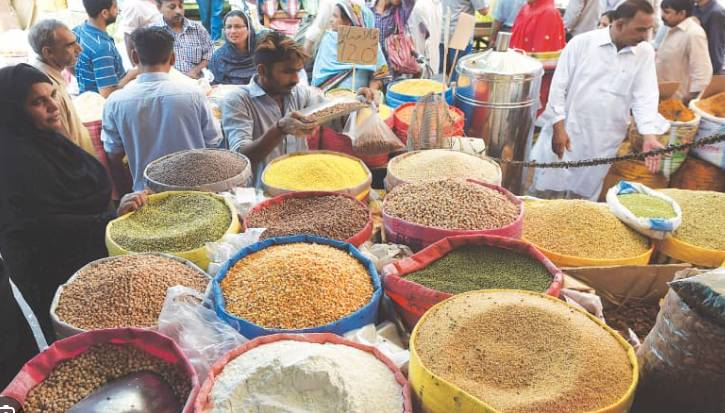
The government has fixed the prices of key food items including rice, pulses, and spices in an effort to control rising inflation, a move that has sparked mixed reactions among traders and consumers alike. The decision was announced through an official notification and reported by local media, signaling tighter price controls on daily essential commodities.
Authorities say the price fixation aims to provide immediate relief to the public as inflation continues to pressure household budgets. By setting official rates, the government hopes to curb profiteering and stabilize the market for staple food items that are widely consumed across the country.
Traders, however, have expressed serious concerns over the decision. They argue that while price controls may help consumers, the government must also account for the rising operational costs faced by shopkeepers. These include rent, electricity bills, transportation costs, and labor expenses, which directly affect retail margins.
According to traders’ representatives, setting prices without considering shopkeepers’ expenditures could lead to financial strain, particularly for small retailers. They emphasized that fair profit margins are essential for sustaining small businesses that form the backbone of local markets.
Traders proposed that the government fix an eight percent profit margin on sugar sales and allow a 15 percent profit on other daily-use commodities. They believe such a framework would strike a balance between consumer relief and business sustainability, ensuring that shopkeepers can continue operations without losses.
They further warned that if reasonable profit rates are not officially defined, small shopkeepers may be forced out of business. This could disrupt supply chains at the neighborhood level and ultimately reduce availability of essential goods, counteracting the very goal of price control.
On the consumer side, citizens have cautiously welcomed the government’s move. Many expressed hope that the official price list would be strictly enforced at the retail level. Consumers believe that without effective monitoring and enforcement, price controls on paper may not translate into real market relief.
Public expectations remain tied to implementation. Shoppers argue that consistent checks and penalties for overpricing are crucial if inflation is to be meaningfully reduced. Without enforcement, fixed prices risk being ignored by sellers.
The backdrop to this decision is a recent uptick in inflation. According to the Pakistan Bureau of Statistics, the country’s inflation rate increased by 0.09 percent over the past week, as reported in its weekly review released on December 26, 2024. The overall annualized weekly inflation rate stood at 2.83 percent.
During the same week, prices of 13 essential items increased. Red chili saw a sharp rise of 6.26 percent, while chicken prices climbed by 5.29 percent. Garlic became costlier by 1.50 percent and eggs rose by 0.58 percent, adding further pressure on household expenses.
At the same time, some relief was noted in other commodities. Prices of 2.5 kilograms of edible ghee declined by 0.56 percent, moong dal fell by 0.48 percent, potatoes dropped significantly by 10.37 percent, and tomatoes became cheaper by 9.64 percent.
As inflation trends remain volatile, the success of the government’s price-fixing policy will depend on transparent implementation and cooperation between authorities and traders. Whether the move brings lasting relief or adds strain to small businesses will become clearer in the coming weeks.