
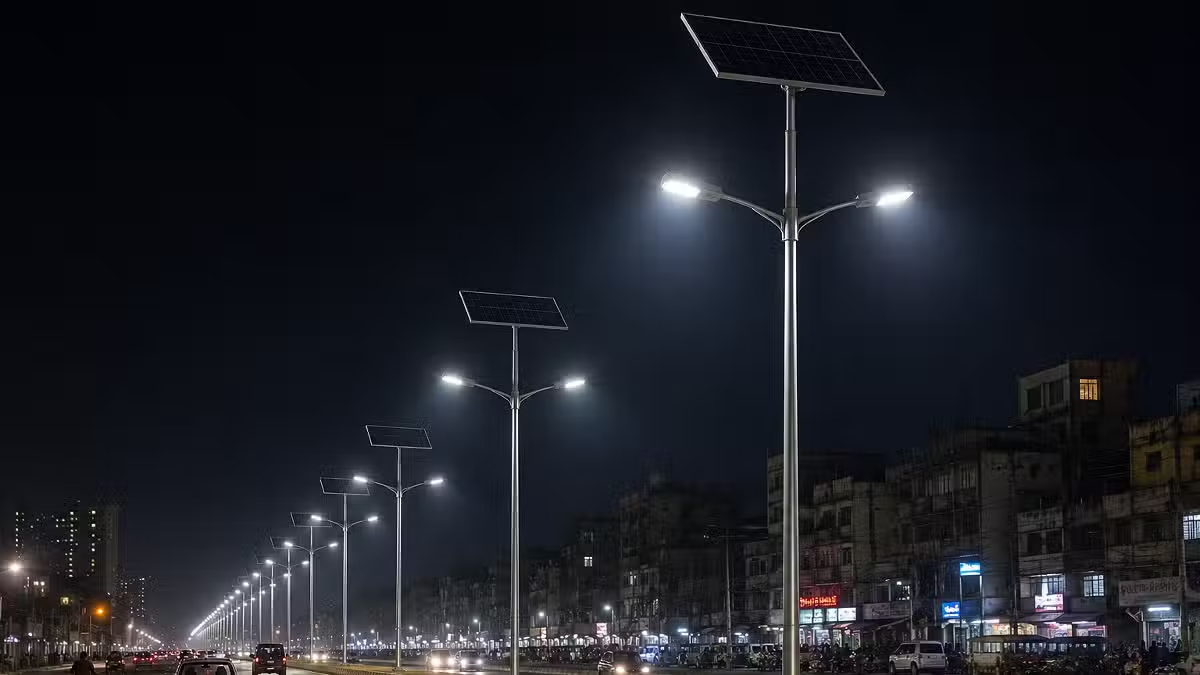
Karachi is set to expand its solar streetlight project as Mayor Barrister Murtaza Wahab has directed the Karachi Metropolitan Corporation (KMC) to begin work on additional major roads across the city.
The decision follows what officials described as positive results from the installation of solar-powered streetlights on key roads. The expansion is aimed at improving public lighting while reducing the city’s reliance on conventional electricity.
Mayor Murtaza Wahab said the conversion of streetlights to solar energy would help reduce electricity consumption. He also emphasized that the initiative would provide citizens with better and more reliable lighting on important roads.
Solar streetlights operate using energy generated through solar panels, allowing lighting systems to function without relying entirely on the conventional electricity grid. This can potentially reduce electricity costs and improve lighting reliability in areas where power supply interruptions are a concern.
For a city as large as Karachi, street lighting is an important part of urban infrastructure. Properly illuminated roads can improve visibility for motorists, pedestrians and other road users, particularly during nighttime hours.
The expansion of the project could also contribute to Karachi’s efforts to adopt cleaner and more sustainable energy solutions. Solar power is a renewable energy source and can help reduce dependence on conventional electricity generation.
The KMC has now been directed to initiate work on additional important roads. The project is expected to build on the experience gained from earlier solar streetlight installations and expand the use of renewable energy across Karachi’s road network.
Reducing electricity consumption is another important objective of the initiative. With thousands of streetlights operating across the metropolitan area, shifting a larger portion of the system to solar energy could help lower the electricity requirements associated with public lighting.
The project may also provide long-term operational benefits if solar lighting systems reduce dependence on grid electricity and require less spending on conventional power consumption. However, the effectiveness of the expansion will depend on installation quality, maintenance and the availability of functioning solar equipment.
Reliable street lighting is particularly important for Karachi because major roads remain busy well into the night. Better illumination can support smoother movement of traffic and improve visibility at intersections and other heavily used areas.
The expansion of solar streetlights also reflects the growing interest in renewable energy solutions for urban infrastructure in Pakistan. Cities face increasing pressure to manage energy costs while maintaining essential public services.
For Karachi, the project combines two important objectives: improving street lighting and reducing electricity consumption. If successfully implemented and maintained, the expanded solar lighting network could become an important part of the city’s broader infrastructure development efforts.
Further details about the roads selected for the next phase and the implementation schedule are expected as the Karachi Metropolitan Corporation begins work under the mayor’s direction.