
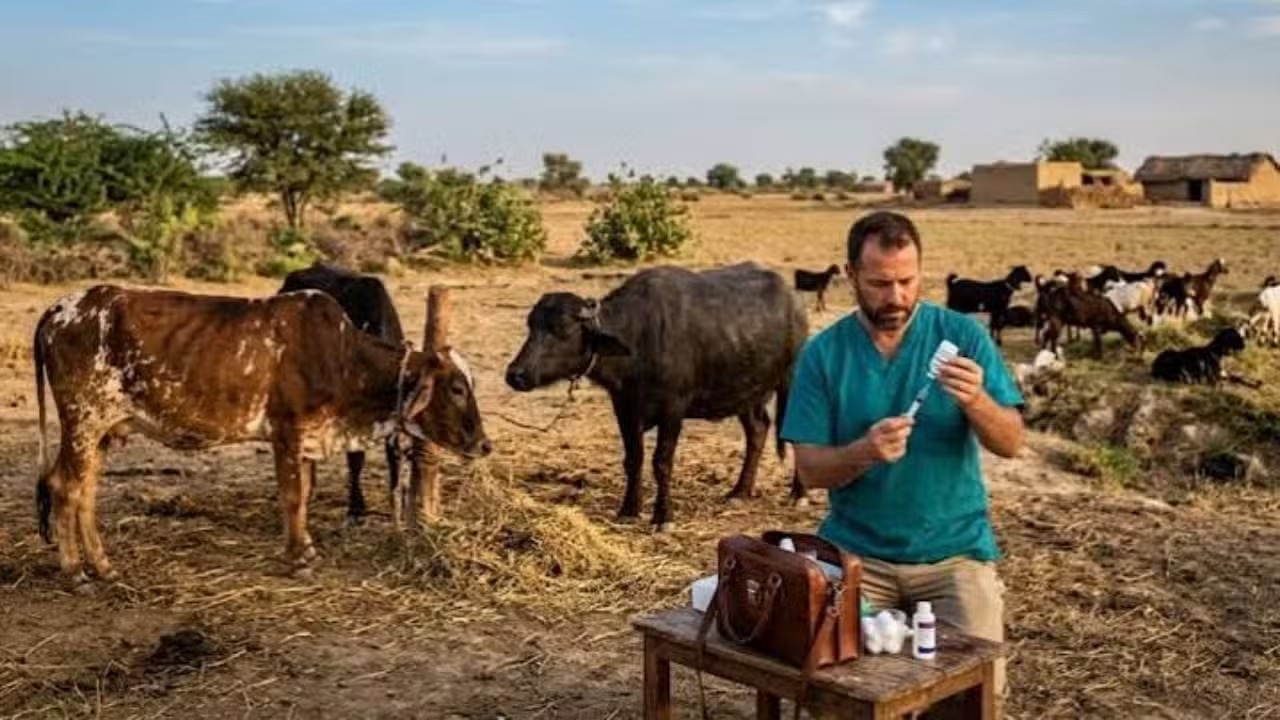
The Sindh government has achieved a significant milestone in the livestock sector by successfully completing the province’s first-ever embryo transfer experiment. The initiative aims to improve cattle genetics, upgrade livestock breeds, and increase milk and meat production through modern reproductive technology.
The development marks an important step towards introducing scientific breeding methods in Sindh, potentially helping farmers improve livestock quality and agricultural productivity.
The experiment was carried out through a joint initiative involving the Sindh Livestock Department and private organisation FoneGrow at the Sindh Institute of Animal Science. The collaboration represents an effort to bring advanced animal breeding techniques into the province’s livestock industry.
Sindh Livestock Minister Muhammad Ali Malkani briefed Chief Minister Syed Murad Ali Shah about the successful experiment and the broader project. The briefing highlighted the government’s efforts to modernise livestock farming and introduce scientific solutions to improve cattle breeds.
Embryo transfer is an advanced reproductive technology used in animal breeding. It involves collecting embryos from genetically selected female animals and transferring them into recipient animals, which carry the pregnancy. This technique allows breeders to increase the number of offspring produced from animals with desirable genetic characteristics.
The technology can help livestock farmers improve important traits such as milk production, meat quality, growth performance, and overall breeding potential. It also provides an opportunity to expand high-quality cattle populations more efficiently than conventional breeding methods alone.
For Sindh, where livestock farming plays an important role in rural livelihoods and the agricultural economy, the introduction of embryo transfer technology could create new opportunities. Many farming households depend on cattle and other livestock for income, dairy production, and meat supply.
Improving cattle genetics could contribute to higher productivity and better-quality livestock over time. If implemented effectively, modern breeding programmes may also help farmers achieve improved production results while making better use of existing livestock resources.
The collaboration between the provincial Livestock Department and FoneGrow also highlights the importance of cooperation between government institutions and private organisations. Such partnerships can support the introduction of specialised technology, technical expertise, and scientific research into traditional farming systems.
The Sindh Institute of Animal Science is expected to play an important role in supporting research and the application of modern livestock breeding techniques. Scientific facilities and trained professionals are essential for ensuring that embryo transfer programmes are conducted effectively.
However, the wider impact of the initiative will depend on its future implementation, accessibility for farmers, technical support, and the availability of resources. Making advanced breeding services accessible beyond research facilities will be important for extending the benefits to livestock owners across Sindh.
The successful completion of the province’s first embryo transfer experiment represents an important development in Sindh’s livestock modernisation efforts. It also creates an opportunity to explore how reproductive biotechnology can contribute to better cattle breeds, increased dairy production, and improved meat supply.
With government support and continued scientific research, the initiative could become part of a broader strategy to strengthen Sindh’s livestock sector and improve the productivity of the province’s agricultural economy.