
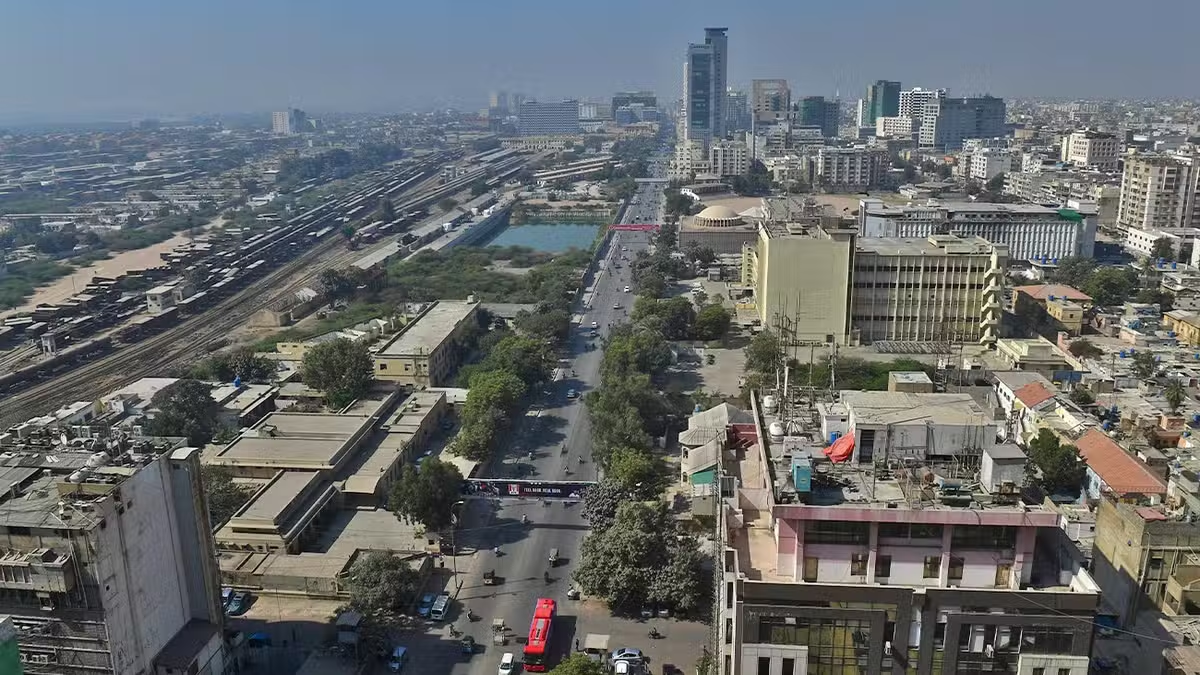
More than 70 percent of nearly 1,900 buildings inspected in Karachi since January have failed to meet the required fire safety standards, highlighting serious concerns about the protection of residents, employees and visitors across the city.
The findings were revealed during the fourth National Fire Safety Conference and Risk-Based Awards 2026, organized by the Fire Protection Association of Pakistan (FPAP).
Rescue 1122 Chief Operating Officer Abid Jalal shared the inspection figures during the event, stating that approximately 1,900 buildings had undergone fire safety audits during the current year. More than 70 percent of the inspected properties were found to have shortcomings in their fire prevention and emergency response arrangements.
The findings have raised questions about the overall condition of fire safety infrastructure in Karachi, where residential apartments, commercial centres, offices, factories and other large buildings accommodate thousands of people every day.
Fire safety arrangements are essential for preventing accidents and reducing the risk of casualties during emergencies. Buildings are generally expected to have functional fire extinguishers, emergency exits, alarm systems, smoke detectors and suitable evacuation arrangements.
However, deficiencies in these facilities can make it difficult for occupants to escape safely when a fire breaks out. Poorly maintained equipment, blocked emergency routes and inadequate fire detection systems can further increase the risks.
Karachi’s growing population and expanding commercial infrastructure make fire prevention an important public safety priority. High-rise buildings and densely occupied commercial properties require effective safety systems to protect people and minimize property damage.
Regular inspections can help identify potential hazards before they develop into serious incidents. Authorities can also use audit findings to determine which buildings require immediate improvements and where additional safety measures are necessary.
The National Fire Safety Conference provided a platform for discussing fire prevention, emergency preparedness and improvements in safety management. The participation of relevant organizations also highlighted the importance of cooperation between government departments, building owners and private-sector stakeholders.
Building management authorities and property owners have an important responsibility to ensure that their premises comply with applicable fire safety requirements. This includes maintaining emergency equipment, conducting regular safety checks and training staff to respond appropriately during emergencies.
Public awareness is another important part of fire prevention. Occupants should know the location of emergency exits, understand evacuation procedures and avoid obstructing stairways and escape routes.
The latest inspection figures underline the need for stronger compliance monitoring and timely corrective action across Karachi. Buildings found with safety deficiencies need appropriate improvements to reduce risks and protect the people who use these facilities.
As the city continues to expand, ensuring that residential and commercial properties meet fire safety standards remains essential for preventing avoidable accidents and improving public protection.