
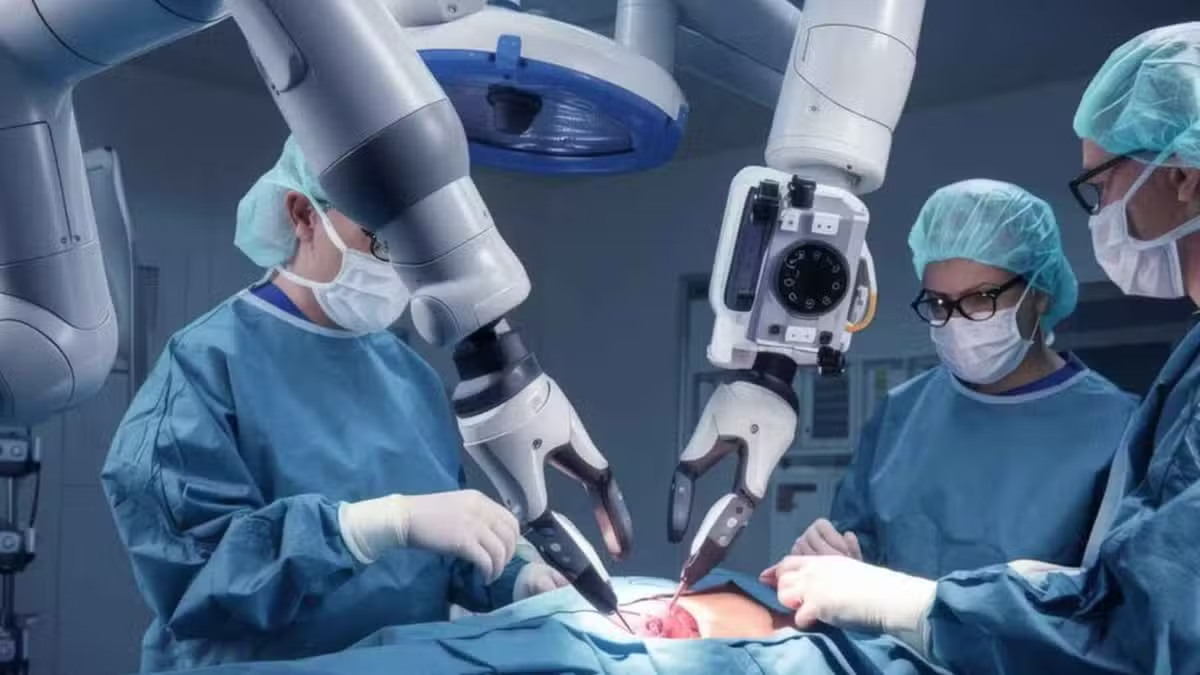
Sindh Government Lyari General Hospital in Karachi has completed more than 100 robotic gynecological surgeries, marking a significant milestone in the adoption of advanced medical technology for women’s healthcare in Sindh.
The achievement highlights the hospital’s growing role in introducing modern surgical techniques and expanding access to technology-assisted treatment. The milestone was celebrated at a ceremony attended by government officials, medical professionals and representatives associated with the institution.
Among those present were Sindh Health Secretary Tahir Hussain Sangi, MNA Yousuf Baloch, Nadir Nabeel Gabol, Shaheed Mohtarma Benazir Bhutto Medical College Principal Professor Dr. Anjum Rehman, Professor Dr. Sahar Fatima and other guests.
Addressing the gathering, Health Secretary Tahir Hussain Sangi said the introduction of robotic surgery at Lyari General Hospital reflected the Sindh government’s policy of incorporating modern technology into the provincial healthcare system.
His remarks underscored the importance of technological development in improving medical services and strengthening the capacity of public-sector hospitals to provide specialized treatment.
Robotic-assisted surgery is an advanced surgical approach in which surgeons use specialized equipment to control instruments during an operation. Depending on the system and procedure, the technology can provide enhanced visualization and allow precise instrument movements.
In gynecology, robotic-assisted techniques may be used for selected procedures involving conditions affecting the uterus and other parts of the female reproductive system. The suitability of this approach depends on the patient’s condition, the complexity of the procedure and the surgeon’s clinical assessment.
The completion of more than 100 procedures represents an important operational milestone for Lyari General Hospital. It also draws attention to the growing role of specialized surgical services within Pakistan’s public healthcare institutions.
Access to advanced treatment in government hospitals can be particularly important for patients who might otherwise face difficulties obtaining specialized care. However, the practical benefits depend on the availability of trained medical teams, appropriate facilities, maintenance support and affordable services.
Robotic-assisted surgery is not automatically the preferred option for every patient. Conventional surgery and other minimally invasive techniques may remain suitable alternatives, depending on the diagnosis and individual medical circumstances.
The expansion of advanced surgical services also requires sustained investment in professional training and hospital infrastructure. Medical teams must be equipped to operate specialized systems safely, while hospitals need reliable technical support and appropriate patient-care arrangements.
Lyari General Hospital’s achievement places a spotlight on the potential for public-sector medical institutions in Sindh to expand their use of modern surgical technology. Continued development of these services could help strengthen specialized healthcare provision, provided that quality, safety and patient access remain central priorities.
The milestone also reflects the broader importance of integrating medical innovation into public hospitals. Alongside introducing new technology, healthcare authorities must ensure that patients receive appropriate assessments, clear information about treatment options and follow-up care.
Although the hospital has crossed the 100-procedure mark, further details about the types of operations performed, patient outcomes, complication rates and the number of patients benefiting from the service would help provide a fuller picture of the programme’s impact.
For now, the completion of more than 100 robotic gynecological surgeries marks a notable development for Lyari General Hospital and Sindh’s efforts to introduce advanced medical technology into public healthcare.