
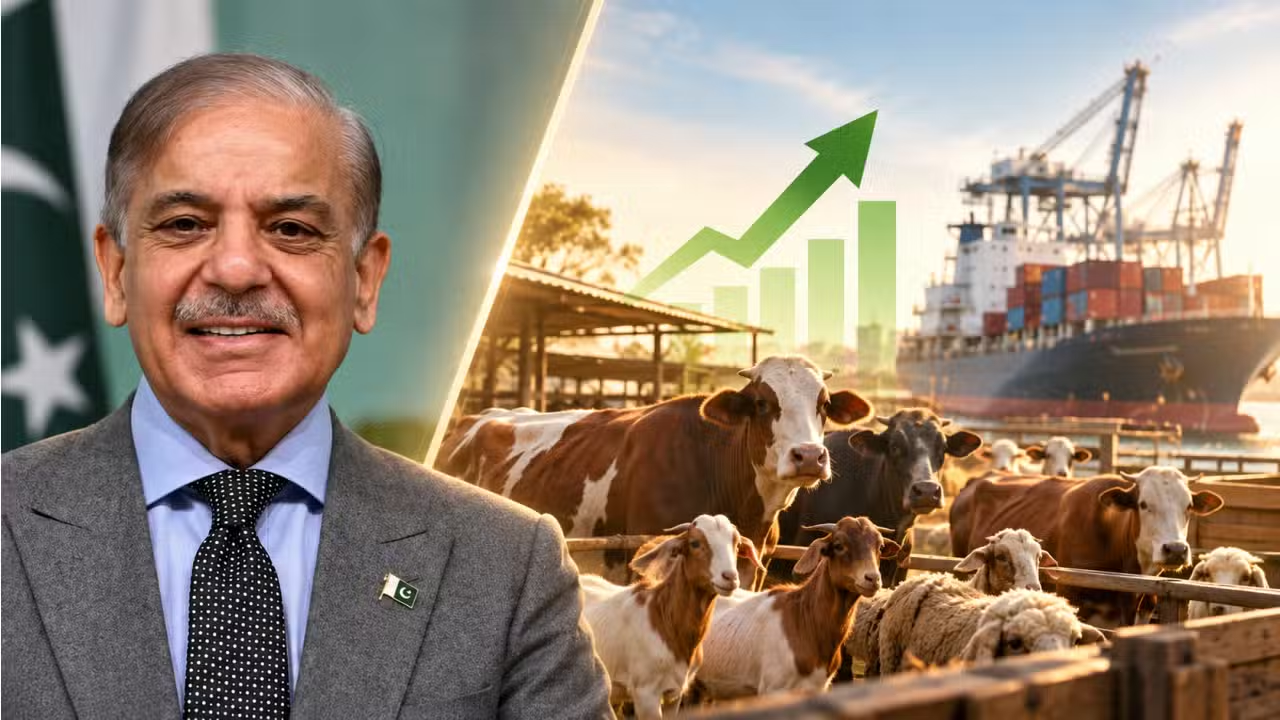
Prime Minister Shehbaz Sharif has approved the restructuring of Pakistan’s Livestock and Dairy Development Board as the government seeks to strengthen the livestock sector, improve animal health and expand the country’s export potential.
The decision was discussed during a review meeting chaired by the prime minister in Islamabad. Sharif directed the relevant authorities to introduce institutional reforms and improve the board’s effectiveness through transparent appointments and greater involvement of qualified professionals.
Under the proposed changes, the board’s chairman and members will be selected through a transparent, merit-based process. The prime minister also called for experienced private-sector experts to be included to bring specialised knowledge and practical experience into the institution.
The restructuring is aimed at improving the board’s ability to support livestock development and contribute to the modernisation of Pakistan’s dairy and animal farming industries. A more effective institutional structure could help improve coordination, strengthen management and support policies designed to increase productivity.
A key priority highlighted during the meeting was the elimination of foot-and-mouth disease, a highly contagious viral infection that affects animals with cloven hooves, including cattle, buffaloes, sheep and goats. The disease can disrupt livestock production and create challenges for farmers, dairy businesses and meat suppliers.
Sharif directed the relevant authorities to prepare a comprehensive action plan to control and eliminate the disease. The plan must include clear targets, measurable outcomes and a defined timeline to ensure that progress can be assessed.
Effective foot-and-mouth disease control generally requires coordinated vaccination campaigns, disease surveillance, rapid reporting of suspected cases and appropriate biosecurity measures. Veterinary services and cooperation from livestock owners are also important for reducing transmission and protecting animal populations.
A well-planned vaccination programme could help strengthen disease prevention efforts, although its effectiveness would depend on factors such as vaccine quality, coverage, timely administration and continued monitoring. Authorities would also need reliable information about disease outbreaks to direct resources towards affected areas.
Livestock is an important part of Pakistan’s agricultural economy. The sector supports rural livelihoods, provides employment and contributes to the supply of milk, meat, leather and other animal-based products.
For many farming households, healthy livestock is essential for maintaining income and meeting daily expenses. Animal diseases can reduce productivity, increase treatment costs and affect the availability of products supplied to domestic markets.
Improving animal health could also support Pakistan’s ambitions to expand exports. International buyers often require exporters to meet animal health, food safety and traceability standards before livestock products can enter their markets.
Stronger disease prevention systems and improved veterinary oversight may help Pakistan address some of the challenges associated with accessing international markets. However, increasing exports would also depend on meeting destination-country requirements, maintaining product quality and developing reliable supply chains.
The inclusion of qualified private-sector experts in the restructured board could provide additional technical and commercial experience. Collaboration between government institutions, veterinary professionals, farmers and livestock businesses would be important for translating the proposed reforms into practical improvements.
The prime minister’s directions place institutional restructuring and foot-and-mouth disease control among the priorities for developing Pakistan’s livestock industry. The requirement for a detailed action plan with measurable targets is intended to establish a clearer framework for implementation and accountability.
Further details about the action plan, vaccination targets, funding arrangements and implementation schedule have not been provided in the available announcement. The results will depend on how effectively the relevant authorities carry out the proposed measures.
The reforms could offer an opportunity to strengthen Pakistan’s livestock and dairy sector by improving institutional performance, protecting animal health and supporting the long-term development of agricultural exports.