
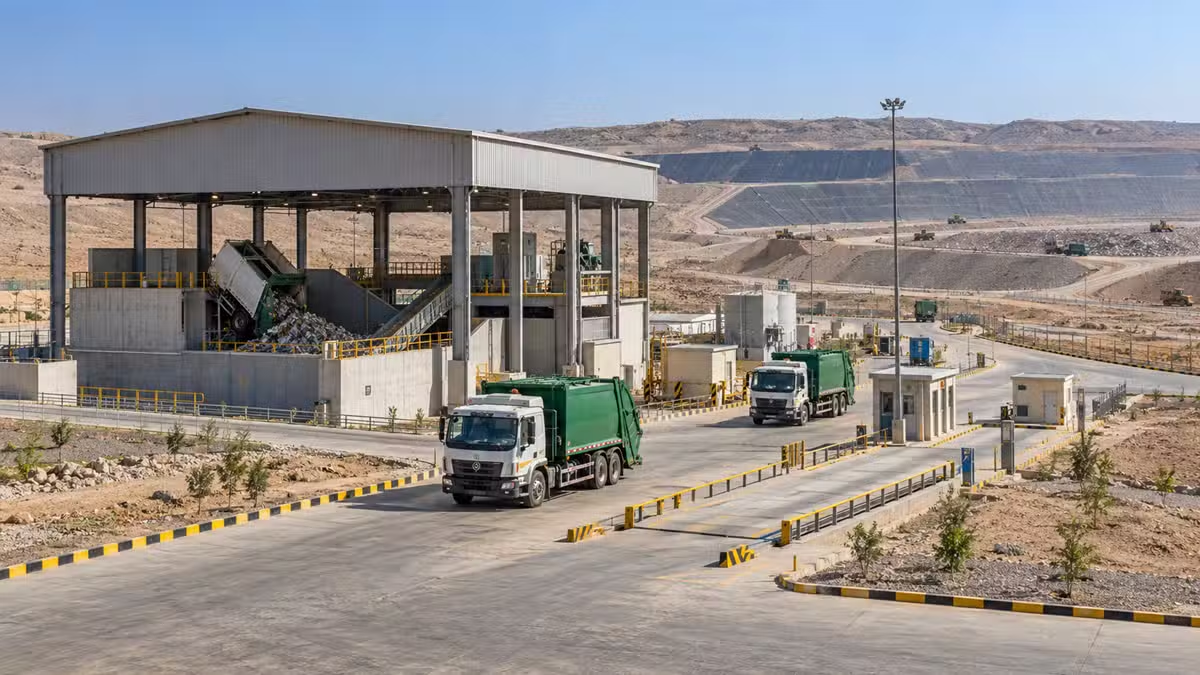
The Sindh government has announced new completion deadlines for four garbage transfer stations (GTS) in Karachi, with three facilities expected to be completed by November 2026 and the remaining station scheduled for March 2027. The revised timeline is part of ongoing efforts to improve the city’s waste management infrastructure.
Sindh Chief Minister Syed Murad Ali Shah shared the update while inaugurating the first phase of Sindh’s first sanitary engineered landfill at Jam Chakro. The announcement highlights the provincial government’s focus on improving waste disposal systems and addressing Karachi’s long-standing garbage management challenges.
The four garbage transfer stations are expected to play an important role in the city’s waste collection and transportation network. Such facilities provide designated locations where garbage collected from different areas can be transferred before being transported to larger disposal or processing sites.
An effective transfer system can help streamline waste transportation, improve the organization of collection routes, and reduce the pressure on existing disposal facilities. However, its effectiveness depends on proper operations, regular maintenance, and coordination between municipal bodies and waste management authorities.
Karachi generates substantial quantities of municipal waste every day, making reliable collection and disposal infrastructure essential for maintaining public health and environmental standards. Delays in waste transportation and inadequate disposal facilities can contribute to overflowing garbage points, unpleasant odours, blocked drainage channels, and environmental pollution.
The revised deadlines provide a clearer timeline for the completion of the four planned facilities. According to the announcement, three garbage transfer stations are expected to be ready by November 2026, while the fourth is scheduled for completion by March 2027.
Meeting these deadlines will be important for translating the announced plans into practical improvements for Karachi’s residents. Once operational, the facilities could strengthen the movement of collected waste from neighbourhoods to designated disposal locations.
The announcement also coincides with progress on the sanitary engineered landfill at Jam Chakro. Unlike uncontrolled dumping sites, an engineered landfill is designed to manage waste through planned infrastructure and environmental protection measures.
Such facilities can help improve waste disposal practices when supported by appropriate design, operational monitoring, and measures to manage leachate, landfill gas, and other environmental risks. The inauguration of the landfill’s first phase represents another development in Sindh’s broader waste management efforts.
Nevertheless, improving Karachi’s sanitation system will require more than constructing transfer stations and landfill facilities. Consistent door-to-door collection, public awareness, waste segregation, recycling, and effective monitoring will also be important for creating a more sustainable system.
For residents, the key question will be whether these infrastructure projects lead to cleaner streets, more reliable garbage collection, and better management of waste across the city. Their impact will depend on timely completion and efficient operation after construction.
The Sindh government’s revised schedule sets November 2026 and March 2027 as the expected completion targets for Karachi’s four garbage transfer stations. Progress against these deadlines will be an important indicator of the city’s efforts to strengthen its waste collection and disposal infrastructure.