
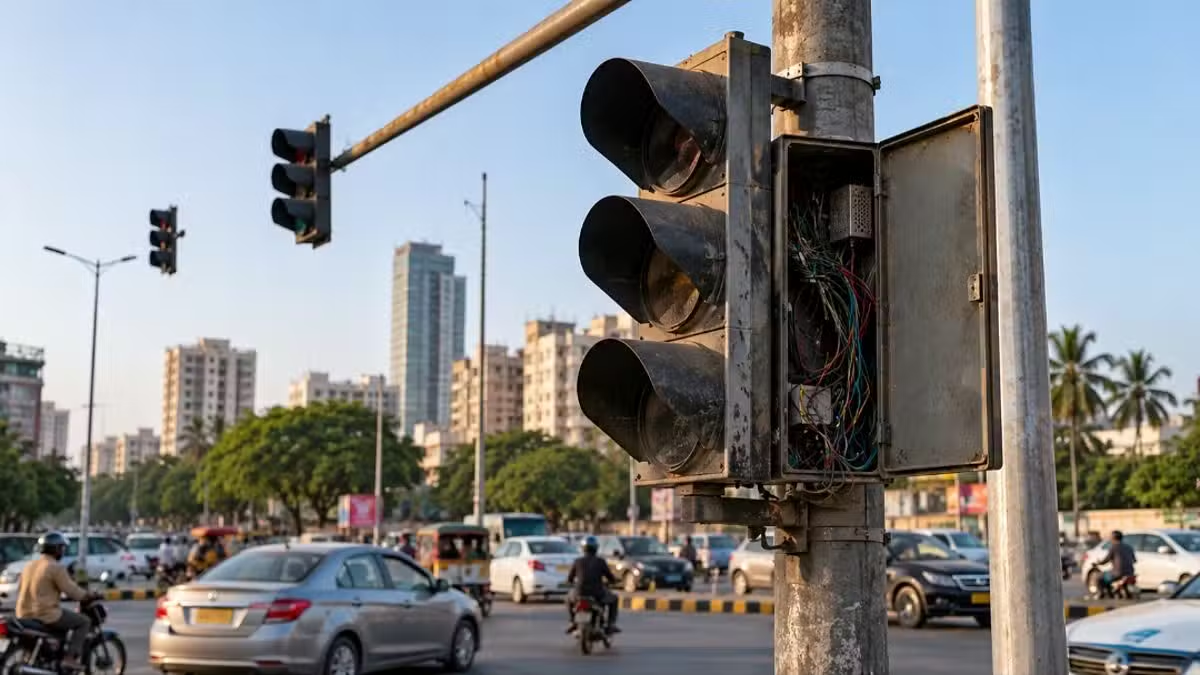
Karachi is facing growing traffic management challenges as cable and equipment theft has left 33 out of the city’s 94 traffic signals dysfunctional. The malfunctioning signals are contributing to congestion on major roads, making daily commutes more difficult for motorists and commuters.
With traffic lights out of operation at several intersections, traffic police personnel are often required to regulate vehicle movement manually. However, the absence of officials at some locations can further complicate traffic flow and increase the risk of confusion at busy junctions.
According to the Karachi Development Authority’s (KDA) Traffic Engineering Bureau (TEB), the situation has been aggravated by a prolonged suspension of repair work. The bureau said maintenance activities had remained halted for more than a year because of funding shortages.
The financial difficulties have also affected contractors responsible for repairing and maintaining traffic signals. According to the bureau, outstanding payments to contractors have exceeded Rs. 10 million, creating further obstacles to restoring the damaged infrastructure.
Cable and equipment theft has emerged as a major concern for the city’s traffic management system. Officials reported that signals at 26 additional locations were also out of order because of stolen cables and equipment, highlighting the wider impact of damage to traffic infrastructure.
Non-functional traffic signals can disrupt the movement of vehicles at busy intersections, particularly during peak commuting hours. When traffic lights stop working, drivers must rely on manual instructions or make decisions without the usual signals, potentially causing delays and confusion.
For a city as large and heavily populated as Karachi, reliable traffic infrastructure is essential for keeping roads moving efficiently. Major intersections depend on properly functioning signals to coordinate vehicles travelling in different directions and reduce conflicts between road users.
The prolonged repair delays also raise questions about the maintenance of public infrastructure and the availability of funds for essential urban services. Without timely repairs, damaged signals may continue to affect commuters and place additional pressure on traffic police personnel.
Restoring the affected signals will require attention to both the immediate technical problems and the financial issues delaying maintenance. Clearing outstanding contractor payments, allocating sufficient funds, and improving monitoring of traffic equipment could help accelerate repairs.
Preventing further theft is another important part of addressing the problem. Stronger protection for cables and signal equipment, regular inspections, and prompt reporting of damaged infrastructure may help reduce repeated disruptions.
The situation also highlights the need for a coordinated approach among relevant authorities to maintain Karachi’s traffic management network. Repairs alone may not provide a lasting solution unless the underlying causes of repeated equipment theft and delayed maintenance are addressed.
For commuters, the restoration of traffic signals could help improve traffic flow, reduce unnecessary waiting times, and make intersections easier to navigate. Until repairs are completed, motorists may continue to face delays at affected locations, particularly where manual traffic management is unavailable.
The reported condition of Karachi’s traffic signals underscores the importance of consistent funding, effective maintenance, and protection of public infrastructure. Timely action by the relevant authorities will be essential to restoring normal operations and easing pressure on the city’s already congested roads.