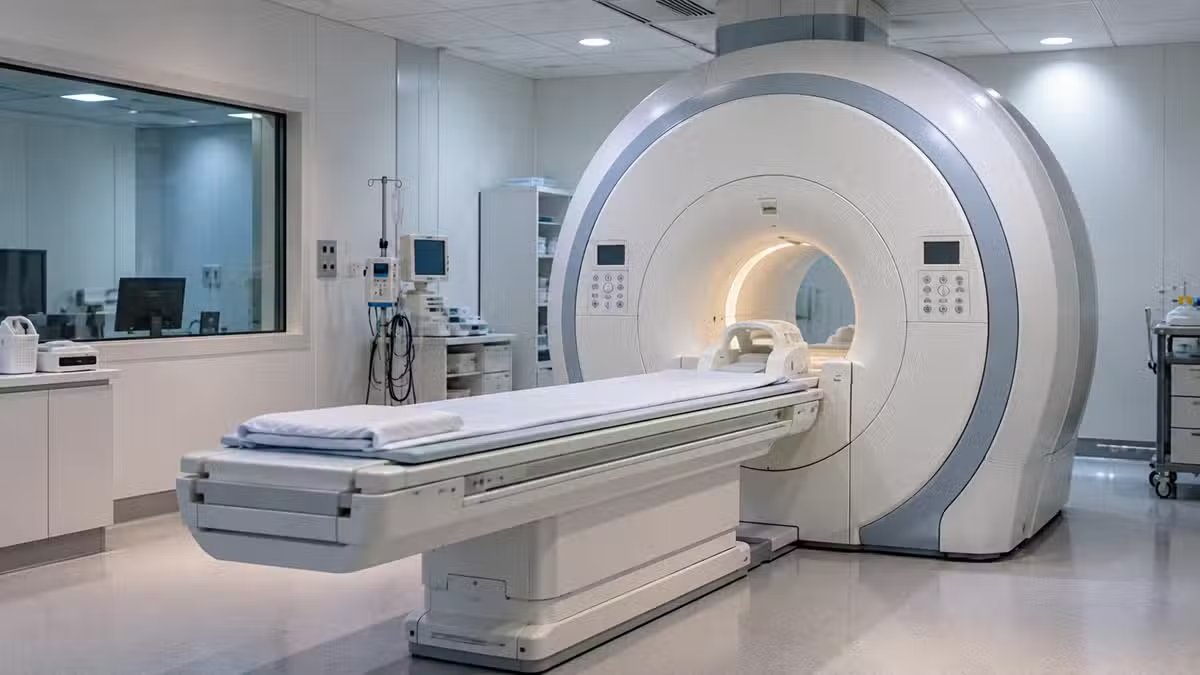
The MRI facility at Abbasi Shaheed Hospital in Karachi has remained non-functional for the past 10 years, depriving thousands of patients of access to an important diagnostic service at one of the city’s major public hospitals.
The hospital’s MRI machine reportedly developed a fault in 2016. Despite the passage of a decade, the machine has not been repaired or replaced, leaving the MRI department effectively out of service.
Abbasi Shaheed Hospital is among the major healthcare facilities operated by the Karachi Metropolitan Corporation (KMC). The continued unavailability of its MRI service has created difficulties for patients who require detailed scans for diagnosis and treatment.
MRI scans are commonly used by doctors to examine different parts of the body and identify conditions that may not be visible through routine diagnostic tests. For patients requiring urgent or specialized imaging, access to an operational MRI facility can be particularly important.
With the machine at Abbasi Shaheed Hospital unavailable, patients who need MRI scans have been forced to seek the service at other hospitals and diagnostic centers. For many people relying on public healthcare, having to travel elsewhere can add extra time and financial pressure to an already difficult situation.
The prolonged shutdown also raises concerns about the maintenance and availability of specialized medical equipment in public-sector hospitals. A machine installed to provide an essential diagnostic service has remained unused for years, limiting the hospital’s ability to offer comprehensive healthcare under one roof.
The issue is especially significant because Abbasi Shaheed Hospital serves a large number of patients from Karachi. The loss of an MRI facility means that people who visit the hospital for treatment may have to arrange diagnostic scans outside the hospital before doctors can complete their assessment.
The 10-year period without a functioning MRI service also highlights the need for timely maintenance and replacement of critical medical equipment. When specialized machines remain out of operation for extended periods, patients can face delays in diagnosis and treatment.
The situation has therefore become an important healthcare concern for Karachi, particularly for patients who depend on public hospitals for affordable medical services.
Restoring the MRI facility at Abbasi Shaheed Hospital would help improve access to diagnostic care and reduce the need for patients to seek scans at other facilities. Repairing the existing machine, if technically possible, or installing a replacement could allow the hospital to resume an important service that has been unavailable since 2016.
The prolonged non-functionality of the MRI machine underscores the wider importance of ensuring that major public hospitals have properly maintained diagnostic equipment. For patients, access to essential medical services is closely linked not only to hospital facilities but also to keeping those facilities operational.