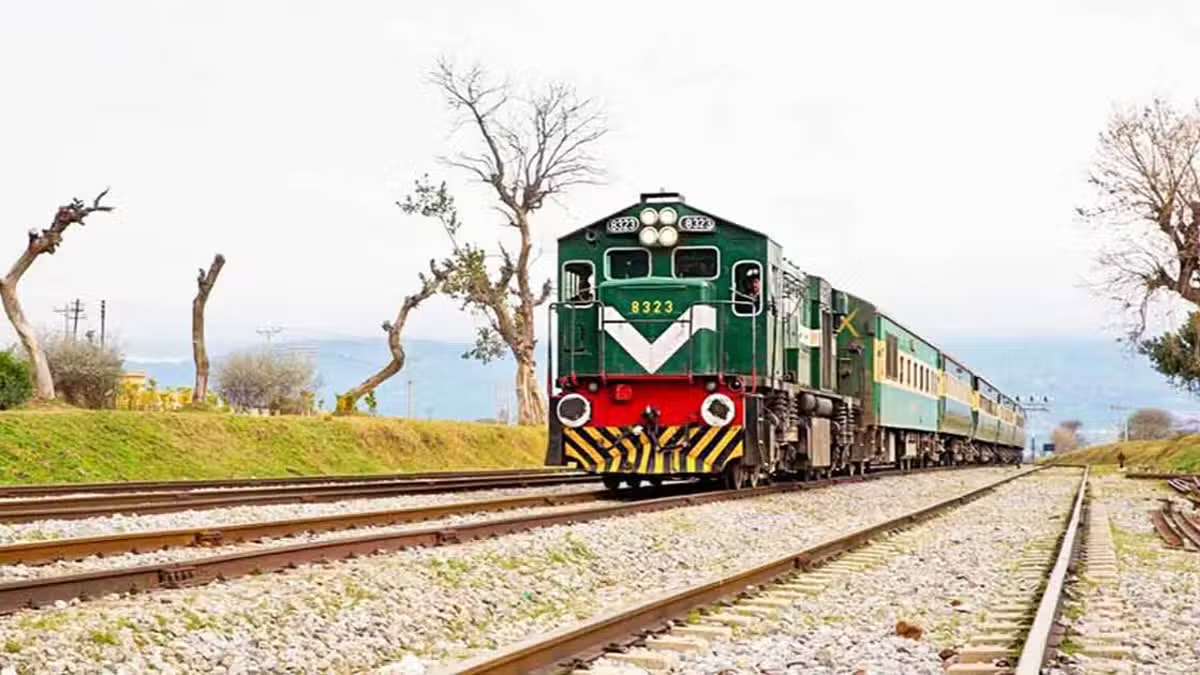
Pakistan’s Main Line-1 (ML-1) railway upgrade is expected to significantly reduce travel time between Karachi and Peshawar, potentially bringing the journey down from around 70–90 hours to approximately 25–30 hours.
The major railway project is aimed at modernizing one of Pakistan’s most important rail corridors and improving connectivity between major cities, industrial centres and ports.
The ML-1 route is a critical part of Pakistan’s railway network, connecting Karachi with Peshawar and passing through several important commercial and population centres along the way.
The planned upgrade is expected to improve the efficiency and capacity of the railway system while making long-distance passenger and freight transportation considerably faster.
The project is being facilitated by the Special Investment Facilitation Council (SIFC), reflecting the government’s focus on improving infrastructure and creating conditions for greater economic activity and investment.
One of the major objectives of the ML-1 upgrade is to strengthen Pakistan’s logistics network. Faster and more reliable rail transportation could help businesses move raw materials and finished products more efficiently.
The upgraded railway line is also expected to support a dedicated freight corridor. This could allow a greater volume of cargo to be transported by rail instead of relying heavily on roads and highways.
A stronger freight rail system could reduce pressure on Pakistan’s road network, particularly on major highways used extensively by heavy commercial vehicles.
Moving more goods through railways can also improve logistics efficiency by providing businesses with an alternative transportation option for long-distance cargo.
The improvement in railway capacity could be particularly important for connecting industrial areas with major ports. Karachi and its surrounding port infrastructure play a central role in Pakistan’s international trade.
Better rail connectivity between ports and industrial centres could help reduce transportation delays and improve the movement of imports and exports across the country.
The projected reduction in Karachi-Peshawar travel time would also represent a major improvement for passengers using the rail network. A journey that currently takes several days could potentially become significantly shorter following the modernization.
The ML-1 upgrade is therefore expected to have implications beyond passenger travel. Its broader objective is to create a more efficient transportation network capable of supporting Pakistan’s economic and industrial needs.
Improved railway infrastructure could also help strengthen regional connectivity and facilitate the movement of people and goods between different parts of the country.
For businesses, faster transportation can reduce delivery times and potentially lower logistics costs. For the national economy, a more efficient rail network could improve the competitiveness of domestic industries.
The development of a dedicated freight corridor could be especially important as Pakistan seeks to increase trade and improve the efficiency of its supply chains.
The ML-1 project represents a major step in Pakistan’s efforts to modernize its railway infrastructure. If successfully implemented, the upgrade could transform the Karachi-Peshawar rail corridor and strengthen the role of railways in national transportation.
With the expected journey time falling to around 25–30 hours, the upgraded ML-1 could provide faster connectivity while increasing freight capacity and reducing dependence on highways.
The project is consequently being viewed as an important infrastructure initiative with potential benefits for transportation, logistics, trade and long-term economic growth in Pakistan.