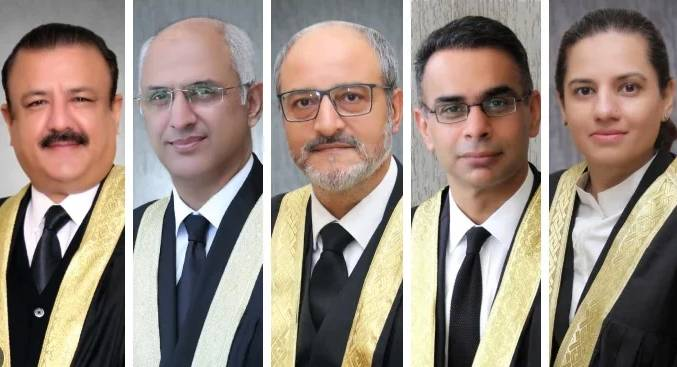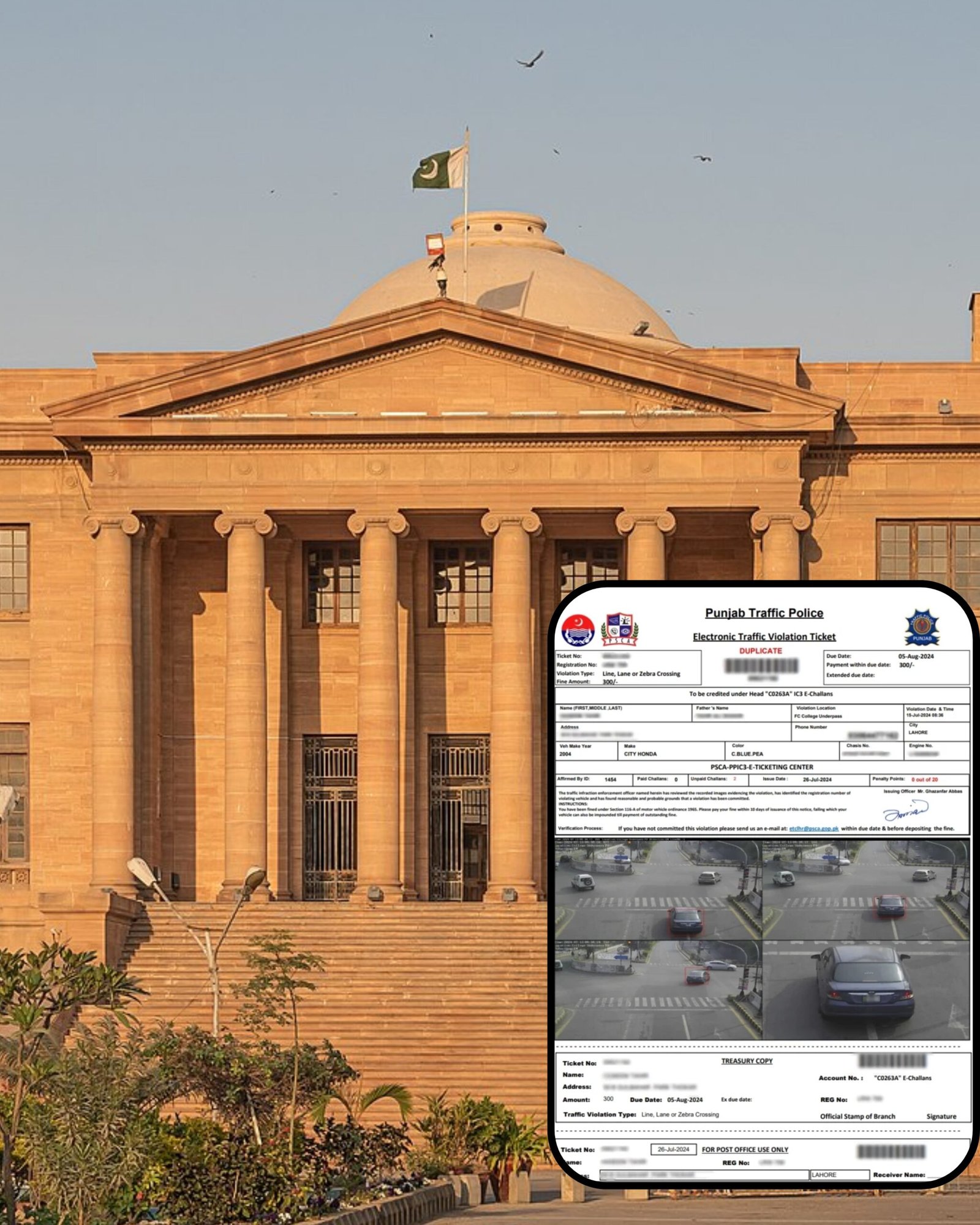
The Sindh High Court has rejected a petition requesting an immediate halt to e-challans in Karachi, allowing the digital ticketing system to continue while the case proceeds. The decision came during Tuesday’s hearing, where the bench also summoned the Deputy Inspector-General (Traffic) to appear on December 11, 2025.
The petition was filed on behalf of the Central Muslim League, Jamaat-e-Islami, and the Bus Owners Association. Their counsel, Munsif Jan, argued that the fine structure in Karachi is significantly higher than in other major cities, including Lahore, creating what he described as discriminatory enforcement.
He told the court that bus operators feel they are being treated unfairly, claiming authorities were restricting drivers from picking up passengers at regular stops. The court advised that buses must stop at designated stands. When the lawyer responded that Karachi lacks proper bus stands, Justice Adnan Iqbal Khan remarked that everyone living in the city is familiar with its infrastructure challenges.
Throughout the hearing, the bench reminded the petitioner not to draw direct comparisons between Karachi and Lahore, emphasizing that each city’s administrative and traffic realities differ. The court made it clear that the matter will only be fully examined once all relevant departments submit their responses.
The petitioners had also objected to warnings that citizens’ CNICs could be blocked over unpaid challans, calling the practice a violation of basic human rights. They argued that inconsistent traffic penalties across provinces undermine the principle of equality before the law.
The petition further highlighted the condition of roads, the state of traffic management, and the lack of adequate facilities in Karachi. According to the petitioners, enforcing heavy fines without improving infrastructure places undue burden on both transporters and commuters.
The court has issued notices to the Sindh Chief Secretary, Inspector-General Sindh, DIG Traffic, NADRA, the Excise Department, and other concerned authorities. Their replies will determine the next stage of proceedings.
For now, e-challans remain fully operational in Karachi as the case moves into its next phase.