Australia has officially named its One Day International (ODI) and Twenty20 International (T20I) squads for the much-awaited white-ball series against India, set to begin on October 19, 2025. The tour promises high-intensity cricket between two of the world’s top-ranked sides and marks a crucial preparatory stage for both nations ahead of next year’s ICC Champions Trophy.
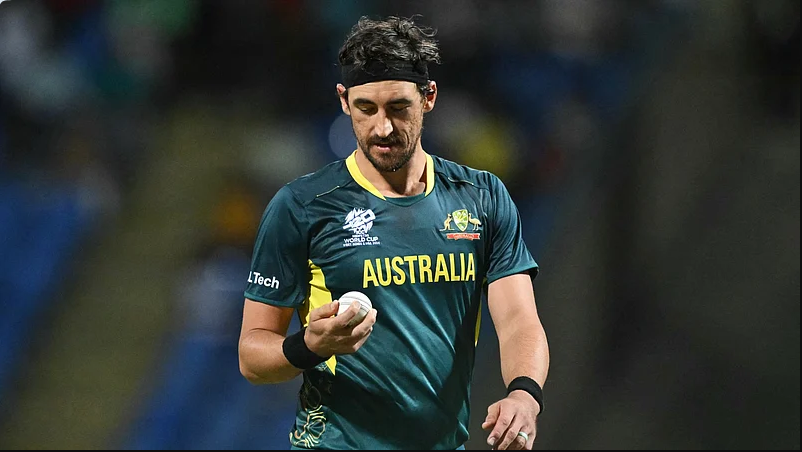
All-rounder Mitchell Marsh will captain both the ODI and T20I squads in the absence of regular skipper Pat Cummins, who continues his rehabilitation from a lumbar bone stress injury. The return of left-arm pacer Mitchell Starc, who missed the last series due to workload management, further strengthens Australia’s pace attack, giving the team an experienced edge against India’s formidable batting lineup.
The series will feature three ODIs on October 19, 23, and 25, followed by five T20Is starting October 29. The contests are expected to draw massive global attention as both teams look to fine-tune their lineups for the upcoming international cricket calendar.
Australia’s selection committee, led by George Bailey, emphasized a blend of experience and youth in the squads, with the return of established names alongside fresh talent who have impressed in domestic and franchise competitions.
The decision to appoint Mitchell Marsh as captain reflects his rising leadership stature within Australian cricket. After leading the side to success in previous short-format series, Marsh’s appointment ensures stability and continuity during Cummins’ absence.
ODI squad analysis
The ODI lineup reflects a balance between dependable veterans and exciting young players. Fast bowler Mitchell Starc headlines the list of returnees, bringing world-class pace and reverse swing ability back to the side. His inclusion will be vital in Indian conditions, where early breakthroughs could decide matches.
The selection of Matthew Renshaw marks his first ODI call-up since 2022. Known for his solid technique and calm temperament, Renshaw’s return adds batting depth and versatility. His presence will offer flexibility in the top and middle order.
Mitchell Owen and Matt Short have also earned places after standout performances in Australia’s domestic limited-overs tournaments. Both are seen as future all-round prospects, capable of contributing with bat, ball, and in the field.
The absence of Pat Cummins is being carefully managed with an eye toward long-term workload balance. Cummins, who remains central to Australia’s red-ball strategy, is expected to make a full recovery before the home Test summer begins.
Other key ODI names include Travis Head, who continues his exceptional form as an opener, Josh Hazlewood, one of the most consistent new-ball bowlers globally, and Adam Zampa, Australia’s premier white-ball spinner. Together, they form a well-rounded attack suited for subcontinental conditions.
Full ODI squad:
Mitchell Marsh (c), Xavier Bartlett, Alex Carey, Cooper Connolly, Ben Dwarshuis, Nathan Ellis, Cameron Green, Josh Hazlewood, Travis Head, Josh Inglis, Mitchell Owen, Matthew Renshaw, Matthew Short, Mitchell Starc, Adam Zampa.
T20I squad insights
The T20 squad, featuring five matches starting October 29, continues Australia’s strategy of combining proven performers with promising names. Josh Inglis makes a return after recovering from a calf strain, expected to play a key role both as a middle-order aggressor and wicketkeeper.
Nathan Ellis, who missed recent assignments due to the birth of his first child, also rejoins the side, bringing depth and variety to Australia’s death bowling options. His slower deliveries and yorkers have been instrumental in closing out tight T20 games.
Two notable absences in the squad are Glenn Maxwell, ruled out with a fractured arm, and Marnus Labuschagne, who was not included in either squad as selectors chose to rest him before the home summer. Maxwell’s absence will be particularly felt given his finishing ability and experience in Indian conditions, where he has been a regular performer in the IPL.
However, the return of Marcus Stoinis, along with multi-skilled cricketers such as Tim David and Matt Short, ensures Australia retains explosive batting depth. Travis Head will likely continue as the powerplay enforcer, while Adam Zampa remains Australia’s spin trump card.
Full T20I squad:
Mitchell Marsh (c), Sean Abbott, Xavier Bartlett, Tim David, Ben Dwarshuis, Nathan Ellis, Josh Hazlewood, Travis Head, Josh Inglis, Matthew Kuhnemann, Mitchell Owen, Matthew Short, Marcus Stoinis, Adam Zampa.
Series overview and schedule
The India-Australia white-ball series will serve as a high-profile lead-up to several major cricketing events in 2026. The rivalry, known for its competitiveness, has historically produced some of the most thrilling matches in modern cricket. Both teams will use the series to test their bench strength and finalize combinations ahead of the next ICC cycle.
Series Schedule:
- ODIs: October 19, 23, 25
- T20Is: October 29, 31, November 2, 6, 8
Australia will be eager to bounce back following a 2–1 ODI series defeat to South Africa in August 2025, where inconsistency with the bat and a lack of control in the middle overs cost them crucial matches. The team’s coaching staff, led by Andrew McDonald, has been working to address these shortcomings, emphasizing fielding drills, death-over execution, and adaptability in spin-friendly environments.
Key players to watch
Mitchell Starc’s return is one of the biggest talking points ahead of the tour. His ability to swing the ball at high pace makes him a constant threat, particularly with India’s aggressive top order. After a brief break to manage workload, Starc is expected to lead Australia’s pace battery with renewed energy.
Mitchell Marsh, balancing captaincy and all-round duties, will be under the spotlight. His recent form across formats — including consistent middle-order contributions and sharp bowling spells — has made him one of Australia’s most reliable performers.
Travis Head, fresh off several match-winning innings in both Test and limited-overs formats, remains central to Australia’s batting plans. His partnership with Alex Carey and Josh Inglis could define Australia’s middle-overs strategy.
Youngsters such as Cooper Connolly, Mitchell Owen, and Matthew Short will have opportunities to make their mark. Short, in particular, has impressed in the Big Bash League with his explosive hitting and useful off-spin, earning comparisons to a young Shane Watson.
India vs Australia: The rivalry resumes
The Australia-India rivalry remains one of the most captivating contests in cricket. From Test match epics to T20 classics, the two teams bring intensity, skill, and drama every time they meet. With both sides ranked among the top three in white-ball formats, the 2025 series is expected to be fiercely competitive.
India, led by Rohit Sharma, will field a formidable side featuring Virat Kohli, Shubman Gill, and Jasprit Bumrah, while younger talents like Rinku Singh and Yashasvi Jaiswal are expected to play key roles in the T20I leg. The home advantage will favor India, but Australia’s mix of experience and adaptability makes them strong contenders.
Australia’s approach under Marsh’s leadership
Since taking over white-ball captaincy duties intermittently, Mitchell Marsh has emphasized freedom of expression and fearless cricket. His leadership style, according to teammates, blends calm confidence with tactical intelligence. Players have spoken about his clear communication and willingness to back emerging talent — qualities that have brought positive change to Australia’s dressing room culture.
Under Marsh, Australia has also embraced a more aggressive batting philosophy, focusing on rapid scoring through the middle overs and dynamic finishing at the death. The squad’s composition for the India tour reflects that mindset, featuring a lineup capable of explosive run chases and adaptable bowling combinations.
Bowling depth and balance
Australia’s bowling department appears well-balanced, with a blend of express pace and variation. The inclusion of Josh Hazlewood, Nathan Ellis, and Ben Dwarshuis gives Marsh a range of options for different conditions. Hazlewood’s control with the new ball complements Starc’s attacking style, while Ellis provides precision at the death.
Spin will be handled primarily by Adam Zampa, whose success in recent Indian tours makes him a key weapon. Left-arm spinner Matthew Kuhnemann provides variation, especially in T20s where pitch conditions often favor turn.
A transition phase for Australian cricket
This series also represents a subtle generational shift for Australian cricket. With senior players like David Warner now retired from international formats and Steve Smith being rested from shorter formats, the new lineup reflects a clear focus on the next wave of Australian talent.
Selectors have placed faith in multi-dimensional players who can contribute across departments. The likes of Cameron Green and Marcus Stoinis continue to serve as vital all-round options, bridging the gap between experience and youth.
George Bailey emphasized that the selection panel’s goal was to maintain consistency while expanding opportunities. “We want to give players exposure in challenging conditions like India,” he said. “These experiences are invaluable in shaping our squad for future global tournaments.”
The road ahead
For Australia, the India tour marks the beginning of a packed international season, with home Tests against West Indies and Sri Lanka scheduled immediately after. Maintaining player fitness and rotation will be critical as the team transitions between formats.
With the next ICC Men’s Champions Trophy set for 2026, the focus is on building depth and resilience. The upcoming series will test not just skill, but adaptability — an area where Australian teams have historically excelled.
India, on the other hand, will be aiming to extend its home dominance. Their recent form in limited-overs cricket has been exceptional, and playing at venues like Mumbai, Chennai, and Hyderabad gives them a distinct edge. However, Australia’s record in India, including their ODI series win in 2023, shows they have what it takes to upset the hosts on their own soil.
Conclusion
Australia’s ODI and T20 squads for the 2025 India series mark a carefully considered blend of experience, innovation, and youthful energy. The return of Mitchell Starc strengthens their bowling arsenal, while Mitchell Marsh’s leadership adds composure and strategic clarity.
This tour will not only test Australia’s tactical flexibility in challenging subcontinental conditions but also provide a crucial platform for emerging players to establish themselves ahead of major ICC events.
With both teams determined to assert dominance, fans can expect nothing less than a fiercely contested series filled with high-quality cricket, dramatic moments, and potential career-defining performances.
The upcoming Australia vs India series promises to be more than just a bilateral contest — it is a stage where future stars will rise, veterans will reaffirm their class, and cricket’s most enduring rivalry will once again capture the imagination of fans worldwide.